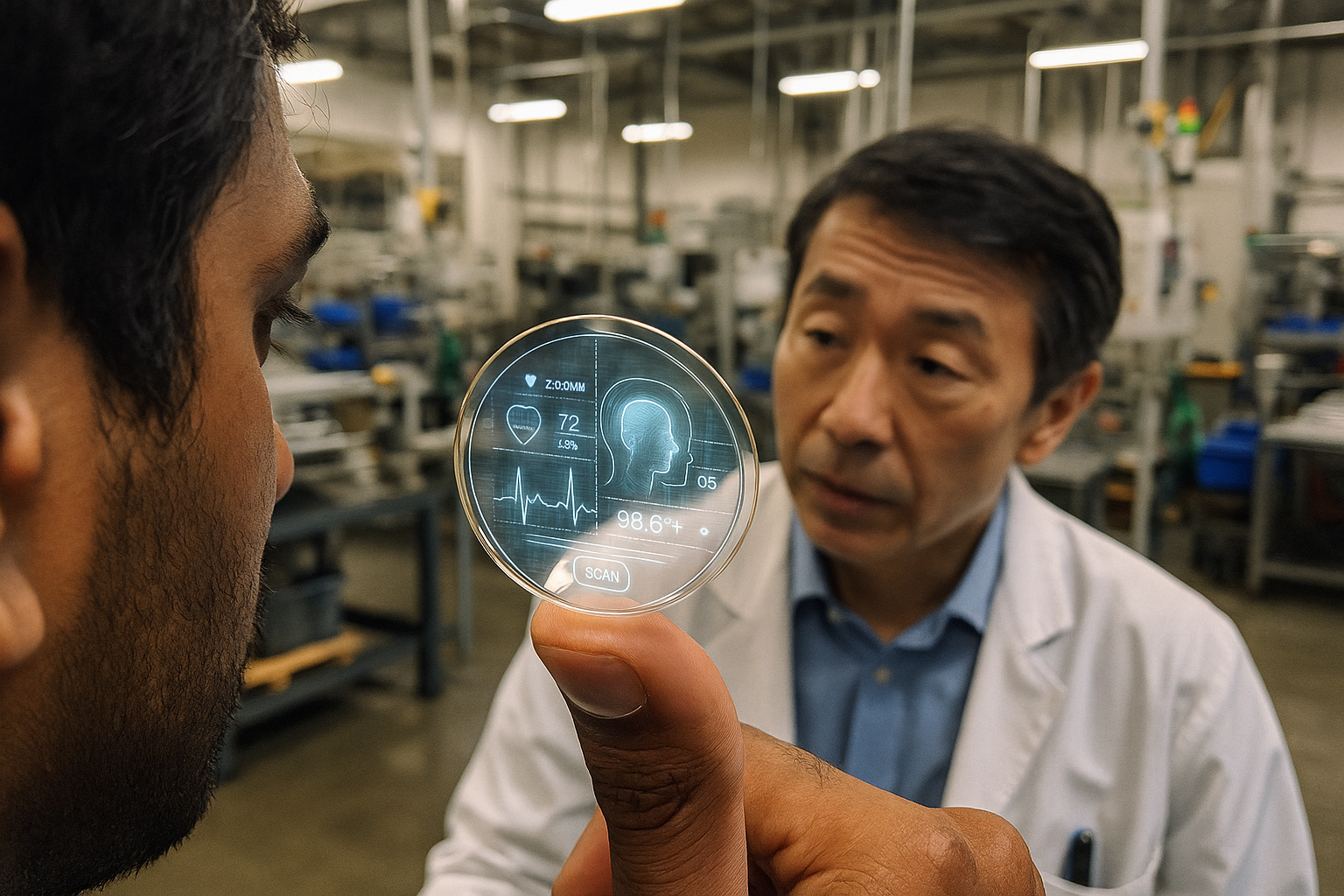
Global Market Trends for Smart Contact Lenses
The smart contact lens market is poised for significant expansion, driven by advancements in miniaturized sensors, wireless communication, and health monitoring capabilities. According to data analyzed by IndexBox as of March 2026, demand is increasing for lenses capable of providing real-time biometric data such as glucose levels, intraocular pressure, and other vital signs. This growth is supported by rising adoption in healthcare, sports, and augmented reality applications.
However, integrating these technologies into a compact and user-friendly form factor poses engineering challenges around power management, secure data transmission, and device reliability. The market size and growth forecast underline the need for robust solutions that address interoperability and system scalability.
Engineering Challenges: Monitoring and System Integration
One of the central challenges in smart contact lens systems lies in consistent and accurate device monitoring. Engineers must develop reliable embedded systems capable of capturing and transmitting physiological data in real time, often through low-power, low-bandwidth wireless protocols.
Moreover, integration with external platforms requires standardized APIs that can handle diverse device outputs and provide seamless data flow into centralized dashboards. These dashboards enable healthcare professionals and end users to visualize and interpret lens data effectively, facilitating informed decisions and timely interventions.
Automation Workflows for Efficient Data Management
Automation plays a critical role in managing the volume of data generated by smart lenses. Engineering teams need to design workflows that streamline data ingestion, preprocessing, anomaly detection, and alerting mechanisms. Automated pipelines reduce manual oversight and improve response times, enhancing the utility of smart contact lenses in clinical and consumer settings.
Additionally, embedding secure authentication and encryption protocols within automation workflows protects sensitive biometric data, ensuring compliance with regulatory standards and user privacy requirements.
To realize these capabilities, collaborative engineering approaches combining hardware prototyping, software development, and cloud integration are essential.