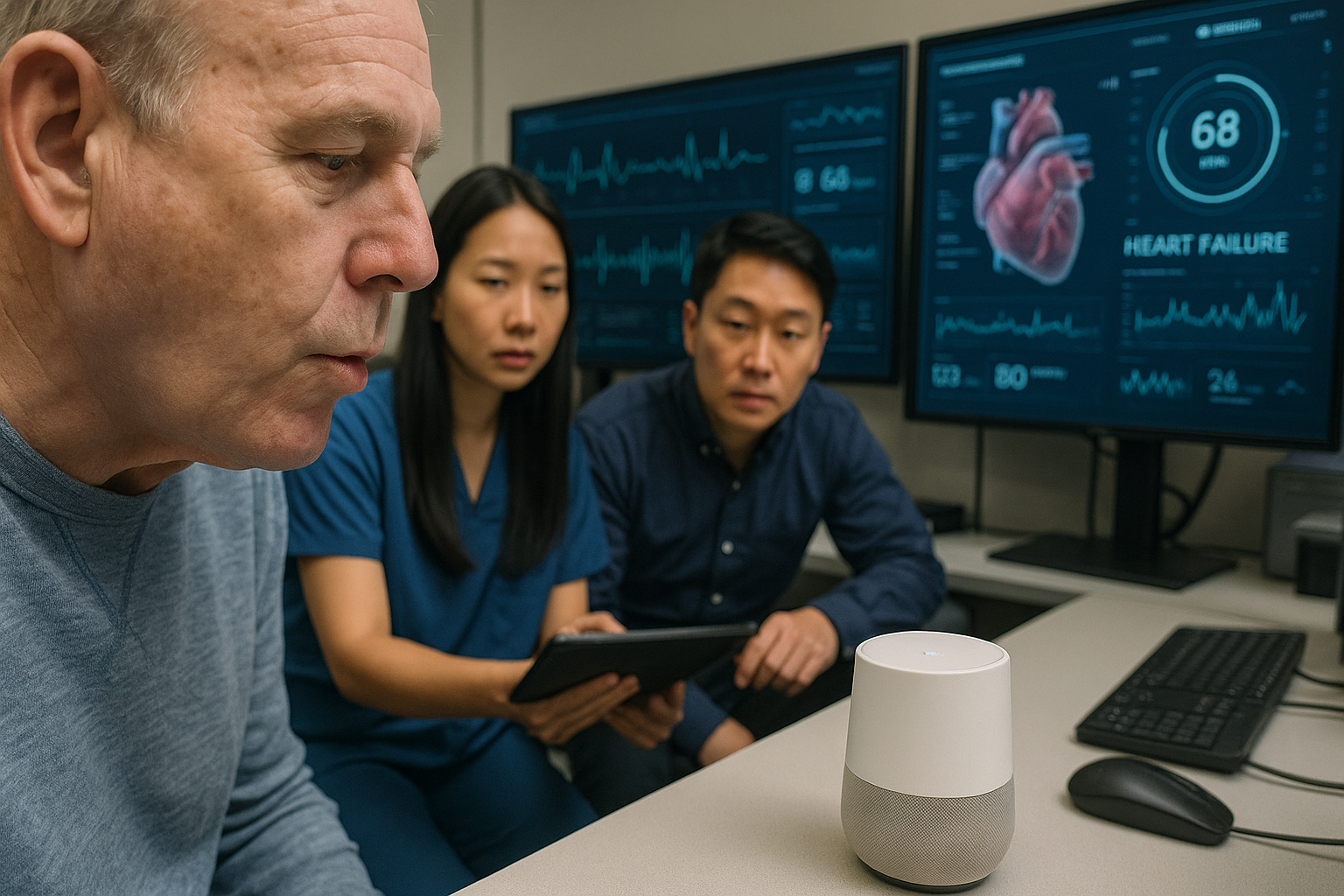
FDA Breakthrough Designation Highlights Innovation in Heart Failure Monitoring
In March 2026, Noah Labs received FDA breakthrough device designation for their AI-driven voice-based heart failure monitoring system. This marks a significant milestone for medical device technology designed to improve patient outcomes by leveraging advanced sensing and artificial intelligence. Heart failure remains a challenging condition to manage due to its complex progression and the need for timely intervention. The breakthrough designation underscores the potential of connected devices to transform care through continuous, non-invasive monitoring.
The Role of Connected Sensing and AI in Healthcare Devices
Connected sensing technologies enable real-time data acquisition from patients, facilitating earlier detection of clinical deterioration. Noah Labs' device uses voice analysis algorithms applied to patient speech patterns collected via smart devices. The AI interprets subtle physiological changes that can signify worsening heart failure, offering advantages over traditional intermittent monitoring methods. This approach exemplifies how integrating AI with medical devices can enhance diagnostic accuracy and personalize patient management.
Secure Data Flows and Operational Dashboards Enhance Reliability and Response
Beyond sensing and AI, the effectiveness of such systems depends on the security and integration of data flows within healthcare networks. Secure data transfer ensures patient privacy and compliance with regulatory standards while enabling clinicians to access timely information. Operational dashboards aggregate and visualize this data, improving care team visibility into patient status and facilitating proactive responses. Together, these technologies close the loop between patient monitoring and clinical intervention, enhancing systemic reliability and responsiveness.
Implications for Healthcare Providers and Technology Partners
For healthcare providers, adopting connected heart failure monitors like Noah Labs' solution can improve patient management efficiency and reduce hospitalizations through earlier interventions. Developing such integrated solutions, however, requires multidisciplinary expertise in engineering, data security, clinical workflows, and regulatory compliance. Companies specializing in connected sensing, secure data infrastructure, and dashboarding play a critical role in bringing these innovations from concept to clinical practice.
Addressing Challenges in Implementation
Implementing AI-enabled medical devices involves addressing challenges such as interoperability with existing electronic health record systems, ensuring high data quality, and maintaining patient engagement. Robust engineering practices and collaboration with clinical stakeholders can mitigate these risks. Continuous monitoring and iterative improvements supported by operational dashboards enable healthcare teams to optimize device deployment and clinical decision-making over time.