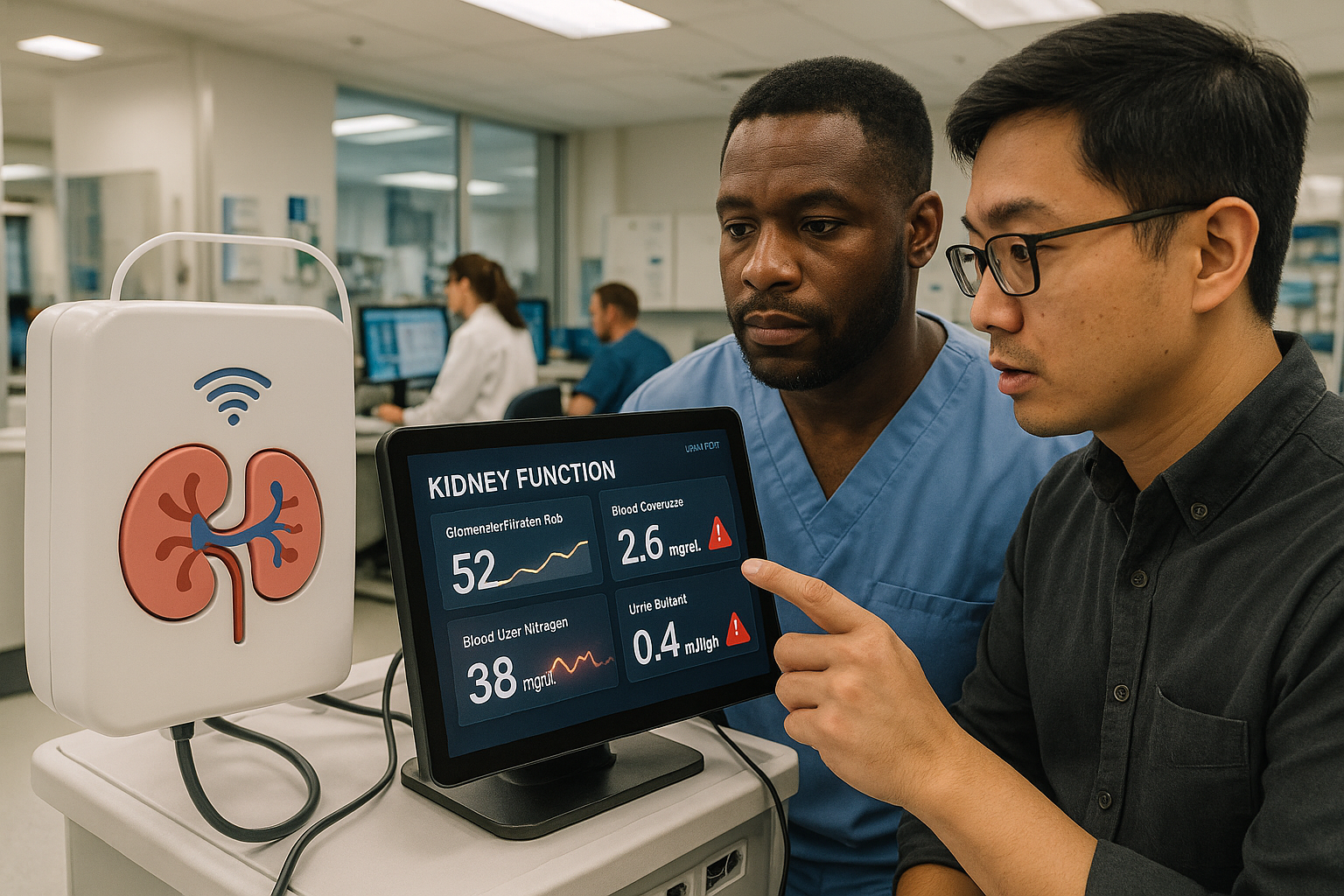
Background of Kidney Function Monitoring in Medical Devices
Kidney function monitoring plays a critical role in patient care, particularly for individuals with chronic kidney disease or those undergoing treatments that impact renal performance. Accurate and timely monitoring can significantly affect treatment decisions and patient outcomes. Recent advancements have emphasized not only the precision of measurement but also the integration of monitoring devices with broader healthcare systems to enable streamlined data collection and analysis.
Recent EU Regulatory Milestone and Its Implications
On March 31, 2026, a new kidney function monitoring device successfully cleared a significant European Union regulatory hurdle, permitting its entry into clinical trials across Europe. This milestone is crucial because it reflects the device meeting stringent safety and efficacy standards mandated by EU regulatory bodies. For manufacturers and healthcare providers, this clearance underpins confidence that the device can be reliably used in diverse European healthcare environments during trials, allowing for extensive data gathering and validation in real clinical settings.
This development also signals enhancements in device software, including secure communication protocols and compatibility with medical data standards required within the EU. Such compliance is essential for integrating device data into hospital systems and ensuring confidentiality and integrity of patient information.
Integration with Device Systems, APIs, and Automation Workflows
The cleared kidney function monitor is designed with connectivity in mind, supporting robust APIs that facilitate seamless data exchange with hospital electronic health records, laboratory information systems, and centralized dashboards. This technical architecture allows healthcare providers to access real-time monitoring data, track patient trends, and respond proactively to changes in kidney function.
Moreover, integrating monitoring devices into automated clinical workflows supports scalability and efficiency. Automation can trigger alerts or initiate protocols without manual intervention, reducing response times and minimizing human error. This leads to better resource utilization and enabling clinicians to focus on direct patient care.
Healthcare technology providers, including engineering firms, can leverage this opportunity to enhance device platforms, develop customized dashboards, and build secure, scalable APIs. Such efforts contribute to a more connected clinical environment and ultimately facilitate improved patient management.