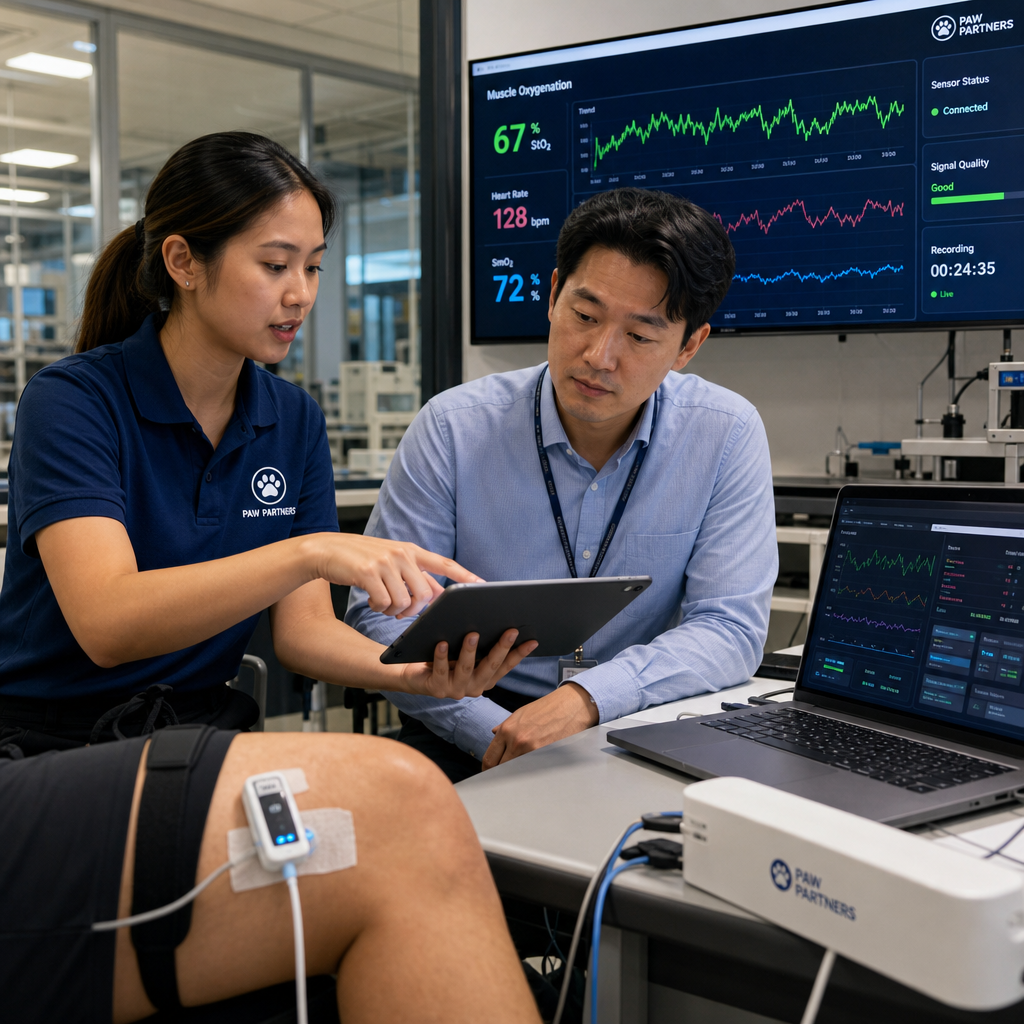
Growing Demand for Muscle Oxygen Monitoring Devices
The muscle oxygen monitors market is experiencing considerable growth driven by advancements in sports science, rehabilitation, and chronic disease management. According to a recent IndexBox market analysis published on March 29, 2026, improved sensor technologies and increased clinical adoption have expanded the application scope of these devices globally. As the demand for real-time physiological data increases, devices must not only provide accurate measurements but also integrate seamlessly into broader health management systems.
Challenges in Device Systems and Data Integration
Despite advancements, current muscle oxygen monitors often face challenges related to data interoperability and integration. Many devices operate within closed ecosystems, limiting the ability to export data to third-party applications or building unified dashboards. This creates silos that hinder comprehensive monitoring and analytics. Moreover, the lack of standardized APIs complicates workflow automation, reducing the potential efficiency gains for healthcare providers and trainers relying on these technologies.
Engineering Opportunities for Enhanced Monitoring Solutions
Addressing these challenges requires focused engineering efforts to develop modular hardware components, open and secure software interfaces, and customizable dashboards. Paw Partners specializes in system engineering that can design and implement solutions allowing muscle oxygen monitors to interface with diverse data platforms. By creating robust APIs and integration layers, these solutions enable automated workflows, facilitate data-driven decision-making, and improve user experience across medical and athletic contexts.
Furthermore, scalable backend architectures developed by Paw Partners can handle large volumes of physiological data, support analytics, and ensure compliance with healthcare industry standards. This approach not only boosts device functionality but also aids manufacturers and service providers in adapting quickly to evolving market and user requirements.
For many organizations, events like this expose the same architectural weakness: data may exist, but it is not yet connected to a dependable operational process. Without that connection, teams see the issue too late or respond inconsistently across locations.
A practical engineering response should treat IndexBox as a signal, not just a news item. The goal is to translate lessons from the event into clearer device telemetry, stronger automation rules, and dashboards that support decisions under real operating conditions.