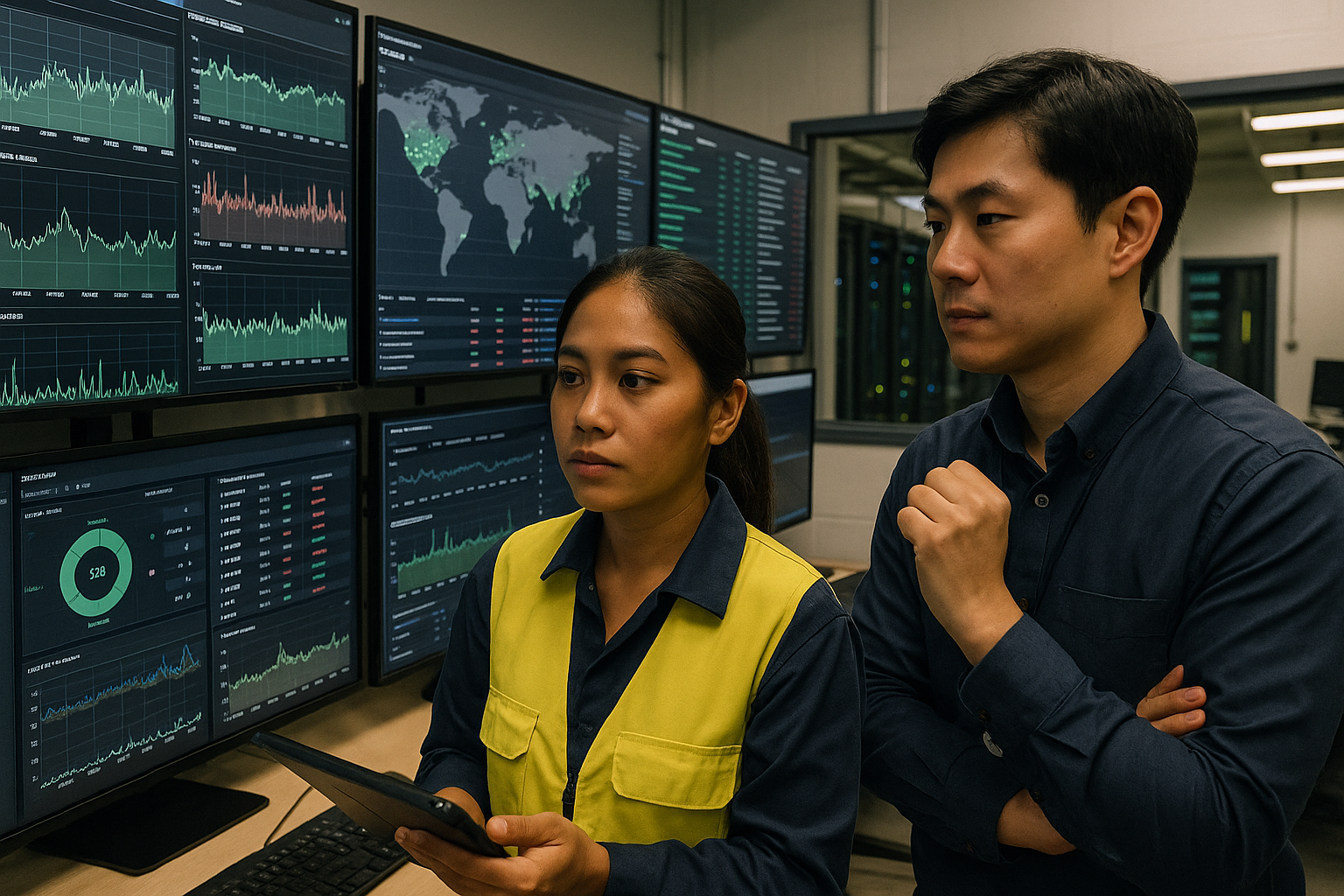
Introduction: The Impact of Recent Global Outages on Asia's Digital Economy
On December 6, 2025, two significant global outages disrupted critical internet infrastructure, including Cloudflare's services, which underpin much of Asia's rapidly growing digital economy. These events exposed weaknesses in existing network and cloud infrastructure and served as a wake-up call for enterprises relying on continuous digital availability. For businesses, from e-commerce to fintech and logistics, even minutes of downtime translate into substantial financial losses and customer dissatisfaction.
Identifying Structural Vulnerabilities Through Device Telemetry
One core issue highlighted by these outages was the lack of sufficient device telemetry and real-time monitoring at various network points. Device telemetry—data collected remotely from hardware and software components—enables operators to detect anomalies before they escalate into outages. Without granular, continuous telemetry, root causes remain obscure and remediation is delayed, exacerbating downtime and operational inefficiencies.
Enterprises need to deploy telemetry solutions that collect metrics such as CPU and memory usage, network latency, packet loss, and error rates from edge devices and central nodes. Such comprehensive data streams improve situational awareness, empower predictive maintenance, and enable rapid fault isolation.
Leveraging Monitoring Platforms and Health Alerts to Minimize Downtime
Beyond telemetry, integrated monitoring platforms consolidate data across devices and locations, providing unified, actionable insights to operations teams. Combined with health alert systems that trigger notifications when indicators surpass predefined thresholds, these platforms facilitate immediate responses. Real-time alerts allow field engineers to prioritize interventions proactively rather than reactively, ultimately reducing Mean Time To Repair (MTTR).
Moreover, automated workflows in modern monitoring platforms can initiate self-healing processes or seamlessly reroute traffic during incident onset, minimizing human intervention and ensuring service continuity.
Improving Field Operations for Resilience in Asia's Expanding Digital Landscape
Field operations benefit significantly from an integrated telemetry and monitoring ecosystem. Technicians receive contextual data and diagnostic insights remotely, allowing them to prepare for on-site repairs efficiently. This not only reduces truck rolls and operational costs but also shortens resolution times, improving overall system availability.
For Asia's diverse and geographically dispersed network infrastructure, such operational improvements are vital. As digital services continue expanding across urban and rural areas, scalable monitoring and responsive field workflows ensure resilient connectivity for end-users.