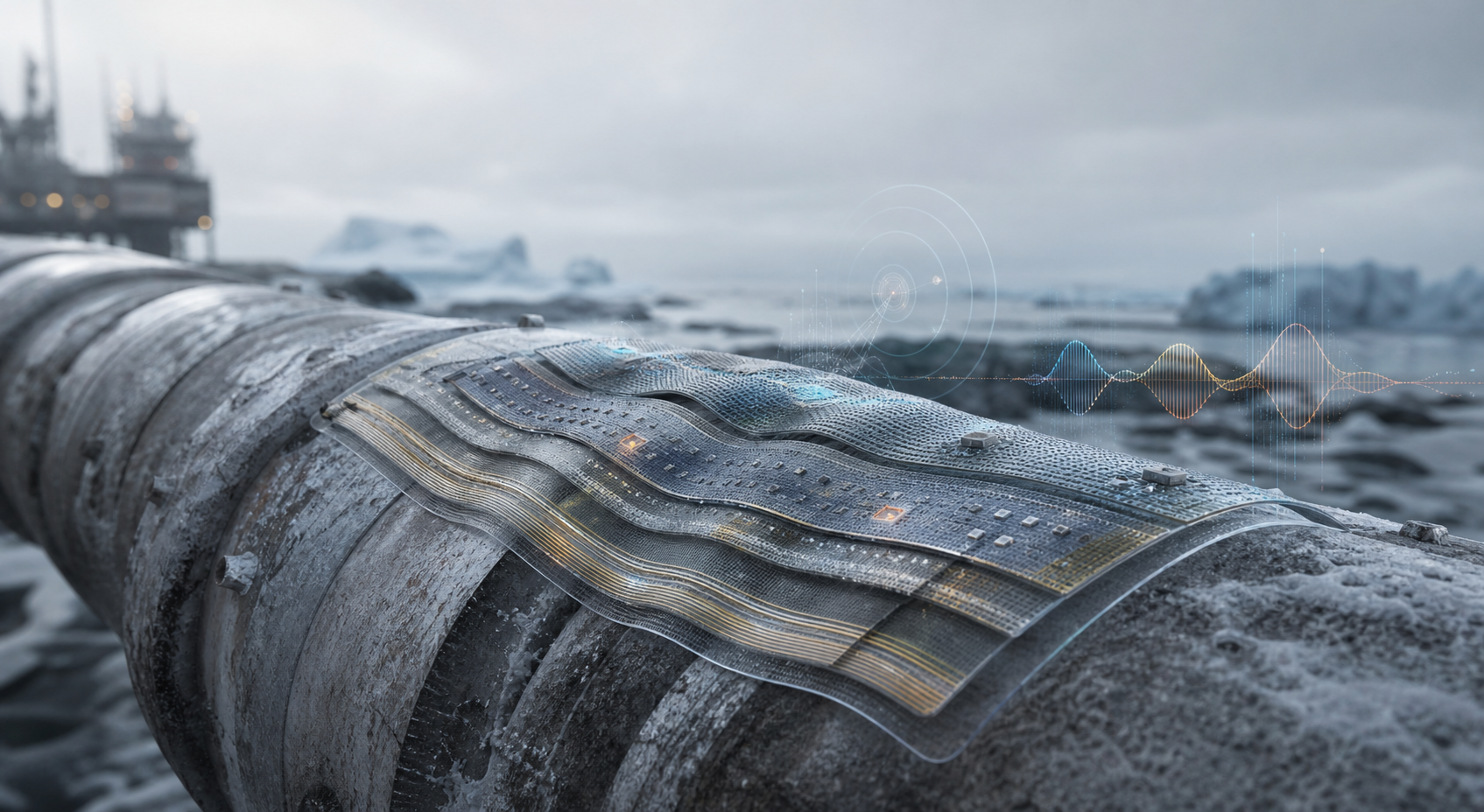
เมื่อวันที่ 2 เมษายน 2026 Bioengineer.org นำเสนอข่าวงานวิจัยเกี่ยวกับเซ็นเซอร์ไบโอนิกแบบกระจายและยืดหยุ่น ที่ออกแบบมาเพื่อการรับรู้ในสภาวะสุดขั้วและการทำงานเชิงอัจฉริยะ งานต้นฉบับตีพิมพ์ใน Communications Engineering และเสนอแนวทางรวมการรับรู้เชิงแสงกับการรับรู้แบบทริโบอิเล็กทริกไว้ในสถาปัตยกรรมเดียว
ประเด็นสำคัญไม่ได้อยู่แค่ว่าเซ็นเซอร์ตัวนี้วัดอะไรได้บ้าง แต่อยู่ที่มันยังคงทำงานได้อย่างน่าเชื่อถือเมื่อเผชิญข้อจำกัดของโลกจริง เช่น การงอ การรับแรง และสภาพแวดล้อมที่ทำให้เซ็นเซอร์ทั่วไปเสื่อมประสิทธิภาพ ปัญหาแบบนี้คือจุดตัดระหว่างฮาร์ดแวร์ ซอฟต์แวร์ และการปฏิบัติงานภาคสนาม
งานวิจัยใช้แรงบันดาลใจจากผิวหนังของฉลามเสือ และออกแบบโครงสร้างที่เลียนแบบกลไกการรับรู้ของธรรมชาติ แนวคิดนี้มีความหมายในเชิงวิศวกรรม เพราะมันมองการตรวจจับเป็นระบบที่กระจายตัว มีหลายจุดรับสัญญาณ และต้องประสานกันได้ ไม่ใช่เป็นเพียงชิ้นส่วนเดี่ยวที่ส่งค่ากลับมาอย่างโดด ๆ
สำหรับทีมที่สร้างอุปกรณ์เชื่อมต่อ ระบบติดตามสภาพ หรือโซลูชันอุตสาหกรรม ข่าวนี้สะท้อนประเด็นเดิมที่สำคัญมาก คือความทนทานของเซ็นเซอร์ คุณภาพของเทเลเมทรี ความเสถียรของการแจ้งเตือน และความพร้อมใช้งานของระบบ ทั้งหมดนี้คือหัวใจของ reliability ในงานจริง
สถาปัตยกรรมของเซ็นเซอร์
เซ็นเซอร์ที่รายงานใช้โครงข่ายเชิงแสงรูปตัว S ซึ่งเลียนแบบ mechanoreceptors ใต้ผิวหนัง ควบคู่กับอินเทอร์เฟซแบบ self-powered triboelectric ที่อ้างอิงการรับรู้ระยะใกล้ในลักษณะเดียวกับ ampullae โครงสร้างนี้ช่วยให้ระบบรับรู้ได้มากกว่าหนึ่งชนิดของสิ่งเร้าโดยไม่ต้องพึ่งเซ็นเซอร์แยกคนละชุดแบบหลวม ๆ
อีกส่วนที่น่าสนใจคือชั้น dielectric แบบยืดหยุ่นที่มี microstructure และทำหน้าที่ได้ทั้งเป็นฐานเชิงแสงและเป็นชั้น triboelectric ไปพร้อมกัน แนวทางนี้ช่วยลดจุดเปราะบางของการประกอบหลายชั้น และเพิ่มโอกาสให้เซ็นเซอร์ทำงานได้ดีขึ้นเมื่อถูกดัดงอหรือรับแรงกดซ้ำ ๆ
สมรรถนะที่สะท้อนความพร้อมใช้งานจริง
ตามผลที่รายงาน เซ็นเซอร์นี้รับรู้การเปลี่ยนแปลงของระยะใกล้ได้ราว 100 มิลลิเมตร และตอบสนองต่อสัมผัสแบบ tactile ได้ในระดับประมาณ 5 มิลลิวินาที จุดเด่นนี้สำคัญมากสำหรับระบบที่ต้องตัดสินใจเร็ว เพราะการตรวจจับที่แม่นยำแต่ช้า มักไม่เพียงพอสำหรับงานควบคุมหรือป้องกันความเสียหาย
งานวิจัยยังระบุว่าสามารถตรวจจับแรงสัมผัสเบาเพียง 0.25 กรัม และทนแรงกดได้สูงถึง 6.26 เมกะปาสคาล ตัวเลขนี้แสดงภาพชัดว่าการออกแบบเซ็นเซอร์ยุคใหม่ต้องบาลานซ์ระหว่างความไวกับความแข็งแรงทางกล ไม่เช่นนั้นระบบจะใช้งานจริงได้ยาก
บทเรียนสำหรับระบบเชื่อมต่อและการปฏิบัติการ
ในมุมของแพลตฟอร์ม IoT หรือระบบมอนิเตอร์ภาคสนาม บทเรียนหลักคือเซ็นเซอร์จะมีคุณค่ามากขึ้นเมื่อถูกออกแบบให้เป็นส่วนหนึ่งของ data pipeline ตั้งแต่ต้น ไม่ใช่ปล่อยให้เป็นอุปกรณ์วัดค่าที่แยกขาดจากระบบซอฟต์แวร์
นี่คือจุดที่ความสามารถของ Paw Partners เข้ามาเกี่ยวข้องโดยตรง ไม่ว่าจะเป็น electronic prototyping เพื่อทดสอบสถาปัตยกรรม, IoT/connected devices เพื่อส่งข้อมูลอย่างมั่นคง, software systems เพื่อจัดการข้อมูล, dashboards เพื่อมองเห็นสถานะอุปกรณ์ และ automation เพื่อสร้าง health alerts ก่อนเกิด downtime
เมื่อเอาแนวคิดนี้ไปใช้จริง จะช่วยสนับสนุนงาน condition monitoring, remote inspection และการตัดสินใจจากข้อมูลหน้างานได้ดีขึ้น สิ่งที่ธุรกิจได้รับไม่ใช่แค่เซ็นเซอร์ที่เก่งขึ้น แต่คือความเสี่ยงที่ลดลงและความพร้อมใช้งานของระบบที่สูงขึ้น
แหล่งที่มา: Bioengineer.org ผ่าน Google News และบทความต้นฉบับใน Communications Engineering