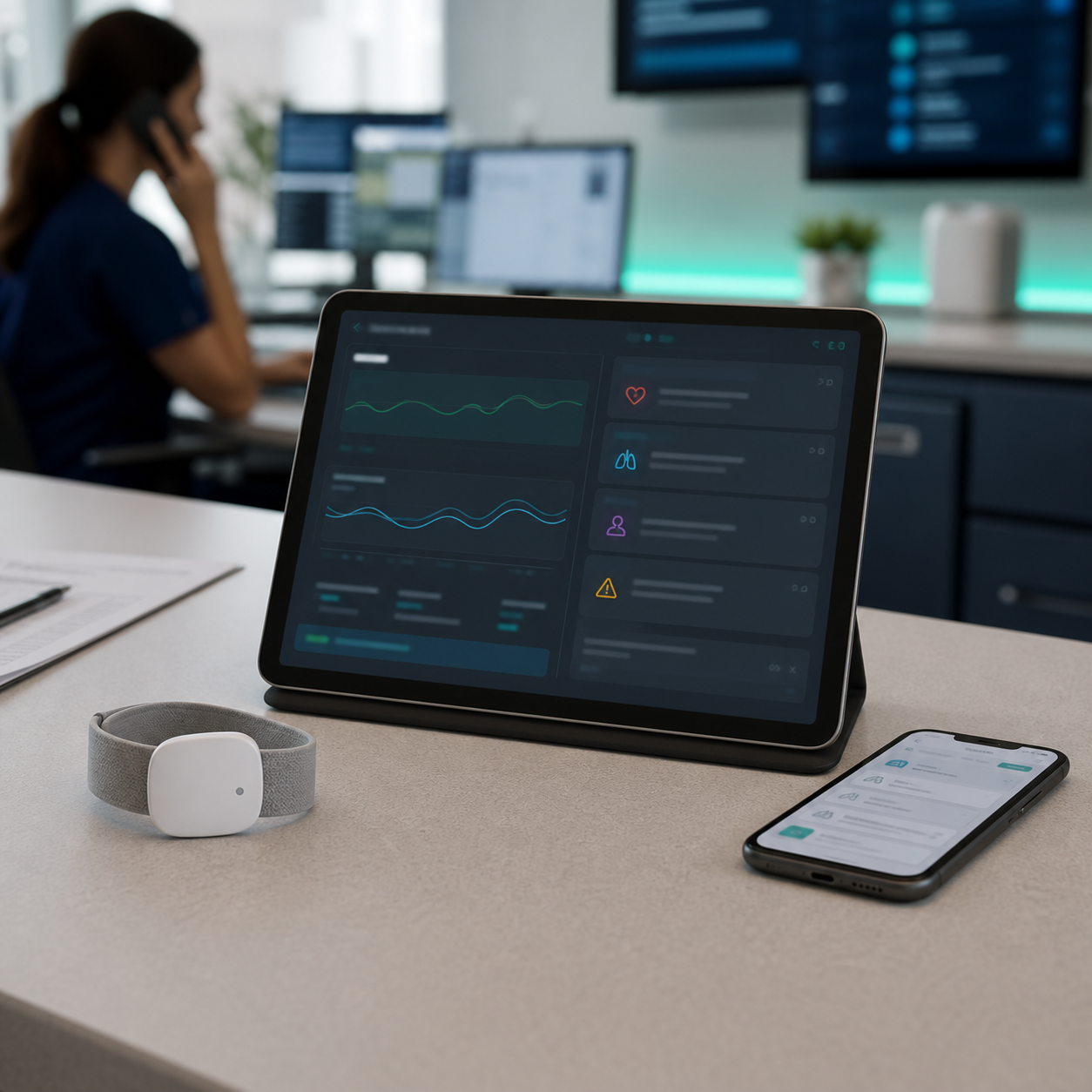
A market summary published through Yahoo Finance on April 14, 2026 projects the digital health monitoring devices market to rise from USD 7.40 billion in 2026 to USD 35.12 billion by 2035. The implied CAGR of 18.90 percent points to sustained demand for monitoring tools that can collect data continuously, surface exceptions quickly, and support decisions across clinical and operational workflows.
The headline matters because the growth is not only about more devices. It reflects pressure on organizations to connect sensors, software platforms, alerting logic, and support processes into a system that is reliable enough for everyday use. When monitoring becomes a core workflow rather than a side feature, device telemetry and backend software must work together without friction.
For teams building or deploying connected health products, the business problem is familiar: data is easy to capture, but hard to operationalize. Without strong integration, alerts can be delayed, dashboards can become noisy, and field teams can lose confidence in the system. That creates downtime, manual follow-up, and missed opportunities to intervene early.
For Paw Partners, this market signal reinforces the value of electronic prototyping, IoT-connected device design, monitoring platforms, and workflow automation. The opportunity is not just to design a device, but to build the surrounding software and operational layer that helps organizations respond faster and run more predictably.
What The Market Signal Suggests
A forecast of this scale indicates broad adoption of digital monitoring across use cases that depend on ongoing visibility. In practical terms, that means more organizations will need devices that can transmit status, measurements, and exceptions into a shared platform that teams can trust.
The important engineering question is no longer whether a device can sense something. It is whether that signal can move through the full chain of capture, transmission, storage, alerting, and action without breaking. Growth in this market rewards systems that make that chain dependable.
When monitoring solutions scale, small design flaws become operational problems. Poor connectivity, inconsistent data formatting, or weak alert rules can create false positives, missed events, and extra manual work. Those are the kinds of issues that directly affect uptime and service quality.
Why Telemetry And Alerts Matter
Telemetry is useful only when it helps a team decide what to do next. A connected device that sends data to a dashboard but does not trigger a meaningful workflow leaves value on the table. The strongest systems translate readings into clear operational next steps.
That is why alert quality matters as much as sensor quality. Rules must be tuned so teams see the right exception at the right time, whether the workflow is in healthcare, a remote service environment, or another monitored setting. If alerts are noisy, staff start ignoring them.
A reliable monitoring stack also reduces downtime by shortening the path from detection to response. This is where software design, backend logic, and operational process intersect. Good telemetry architecture does not just show status; it makes escalation, ticketing, and resolution easier to execute.
What B2B Teams Should Build Next
Organizations planning connected monitoring products should design for the whole system, not only the device. That includes hardware prototyping, connectivity checks, data normalization, dashboards, notification rules, and integration with the tools the business already uses.
This is also where Paw Partners can add value across the product lifecycle. Electronic prototyping helps validate sensing and communication early. IoT and software engineering help move that prototype into a usable platform. Automation and integration help turn data into repeatable operational workflows.
For field operations, the most valuable outcome is consistency. Teams need a system that can detect issues, route them to the right owner, and preserve a clear record of what happened. That improves response time, supports reliability metrics, and makes scale less chaotic.
The market projection suggests more buyers will expect these capabilities as standard. The winners will be the teams that treat monitoring as an end-to-end service layer, not a standalone device feature. That shift favors products with strong engineering foundations and disciplined operational design.