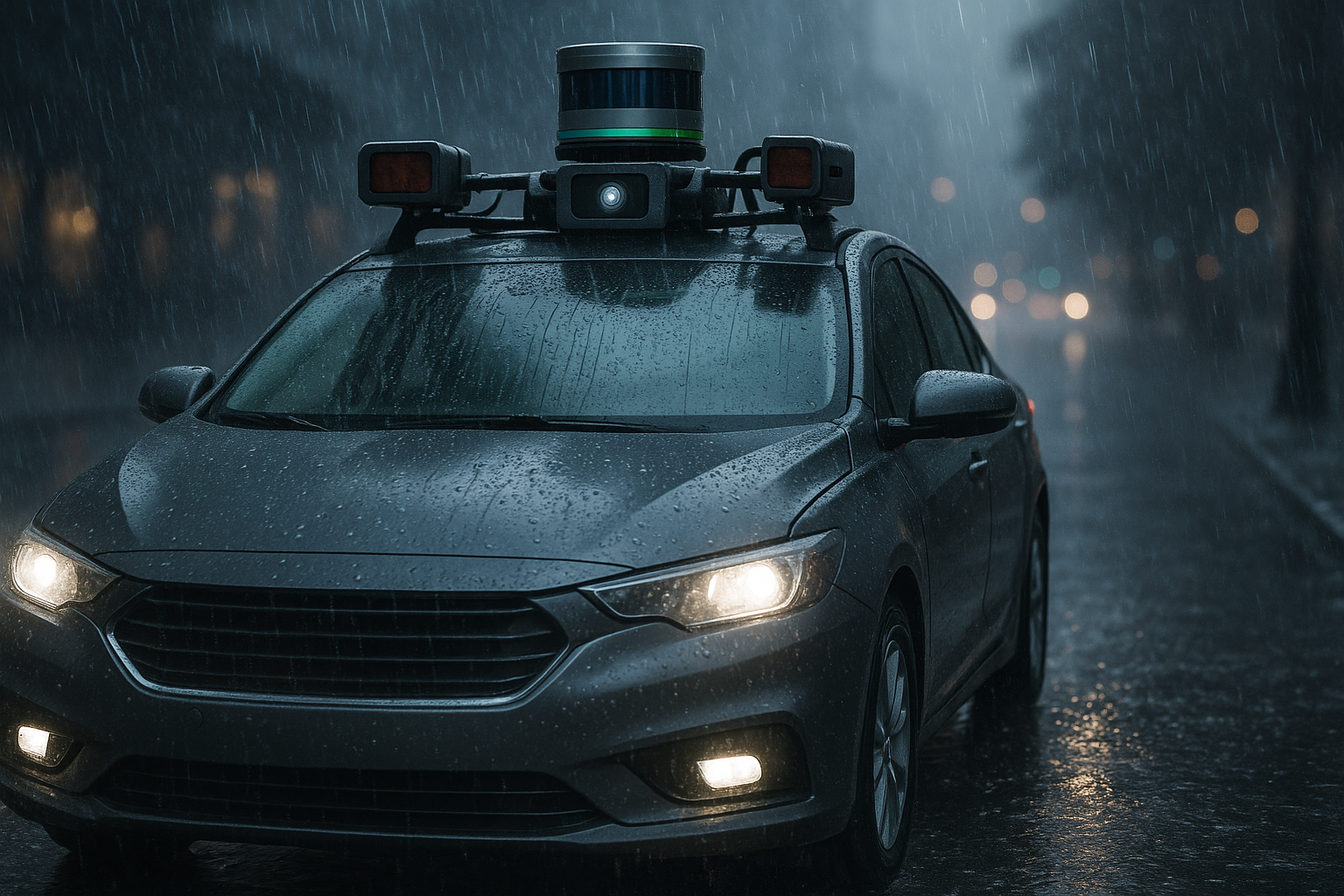
ความท้าทายของการนำทางรถยนต์อัตโนมัติในสภาพอากาศไม่เอื้ออำนวย
รถยนต์อัตโนมัติ (Autonomous Vehicles – AVs) พึ่งพาข้อมูลจากเซ็นเซอร์อย่างมากเพื่อรับรู้สภาพแวดล้อมรอบตัวและตัดสินใจในการนำทาง อย่างไรก็ตาม สภาพอากาศที่ไม่เอื้ออำนวย เช่น ฝน ลูกเห็บ และหิมะ สร้างความซับซ้อนที่ส่งผลต่อประสิทธิภาพของเซ็นเซอร์ ตัวอย่างเช่น น้ำฝนอาจทำให้เกิดสัญญาณรบกวน, การสะท้อน และบดบังทัศนวิสัย ซึ่งส่งผลลดความแม่นยำของระบบ LiDAR, เรดาร์ และกล้อง ที่เป็นหัวใจสำคัญของการทำงานของรถยนต์อัตโนมัติ จึงส่งผลให้มีความเสี่ยงต่อความผิดพลาดในการนำทางและเวลาหยุดทำงานเพิ่มขึ้น
บทบาทของเซ็นเซอร์ที่รับรู้สถานะน้ำฝน
ในช่วงหลัง เทคโนโลยีเซ็นเซอร์ได้มุ่งเน้นพัฒนาระบบที่สามารถรับรู้และปรับตัวต่อสภาพอากาศได้เรียลไทม์ เซ็นเซอร์เหล่านี้มีความสามารถตรวจจับหลายรูปแบบ (multi-modal detection) ที่สามารถแยกแยะได้ระหว่างสัญญาณรบกวนจากน้ำฝนและอุปสรรคหรือคุณลักษณะถนนที่แท้จริง ด้วยการรับรู้สภาพแวดล้อมอย่างแม่นยำ ระบบควบคุมของรถยนต์จึงสามารถปรับอัลกอริธึมการผสมผสานข้อมูลเซ็นเซอร์ (sensor fusion), ปรับปรุงเทคนิคการกรองสัญญาณ และตั้งค่าพารามิเตอร์การนำทางได้อย่างยืดหยุ่น เพื่อรักษาระดับความปลอดภัยและความน่าเชื่อถือในการปฏิบัติงาน
การเพิ่มประสิทธิภาพการดำเนินงานผ่านเทเลเมทรีและการตรวจสอบสุขภาพ
นอกเหนือจากการพัฒนาเซ็นเซอร์ การผนวกรวมระบบเทเลเมทรีและแพลตฟอร์มการตรวจสอบสุขภาพอุปกรณ์ยังมอบประโยชน์ที่จับต้องได้สำหรับการปฏิบัติงานภาคสนาม ข้อมูลเทเลเมทรีแบบต่อเนื่องช่วยให้ทราบถึงประสิทธิภาพของเซ็นเซอร์และบริบทของสภาพแวดล้อม เกิดการตรวจจับล่วงหน้าของการเสื่อมสภาพของเซ็นเซอร์หรือความผิดปกติของระบบที่เกี่ยวข้องกับสภาพน้ำฝน ความสามารถในการรับข้อมูลแจ้งเตือนสถานะและการวินิจฉัยช่วยลดการบำรุงรักษาที่ไม่วางแผนไว้ โดยการคาดการณ์ความล้มเหลวจึงช่วยลดเวลาหยุดทำงานของรถยนต์ วิธีการอย่างมีระบบนี้ช่วยเพิ่มความน่าเชื่อถือของกองยานพาหนะ การจัดตารางปฏิบัติงาน และผลิตภาพโดยรวมในสภาพอากาศที่หลากหลาย
สำหรับธุรกิจที่มีการใช้รถยนต์อัตโนมัติ การผสานรวมระหว่างเซ็นเซอร์ที่รับรู้สถานะน้ำฝนและเครื่องมือการตรวจสอบอย่างครบถ้วน แปลเป็นความสามารถในการนำทางที่แข็งแกร่งและการใช้ทรัพย์สินอย่างคุ้มค่ามากขึ้น
สำหรับหลายองค์กร เหตุการณ์เช่นนี้เผยจุดอ่อนของสถาปัตยกรรมระบบเดียวกัน: ข้อมูลแม้มีอยู่ แต่ยังไม่ได้เชื่อมโยงกับกระบวนการปฏิบัติงานที่เชื่อถือได้ หากไม่มีการเชื่อมโยงนี้ ทีมงานมักพบปัญหาเมื่อสายเกินไปหรือการตอบสนองไม่สอดคล้องกันในแต่ละพื้นที่
การตอบสนองทางวิศวกรรมที่ได้ผลควรถือ Bioengineer.org เป็นสัญญาณ ไม่ใช่เพียงข่าวสาร เป้าหมายคือแปลงบทเรียนจากเหตุการณ์ ลงสู่เทเลเมทรีของอุปกรณ์ที่ชัดเจนขึ้น กฎการทำงานอัตโนมัติที่แข็งแกร่งกว่า และแดชบอร์ดที่สนับสนุนการตัดสินใจภายใต้เงื่อนไขการปฏิบัติงานจริง