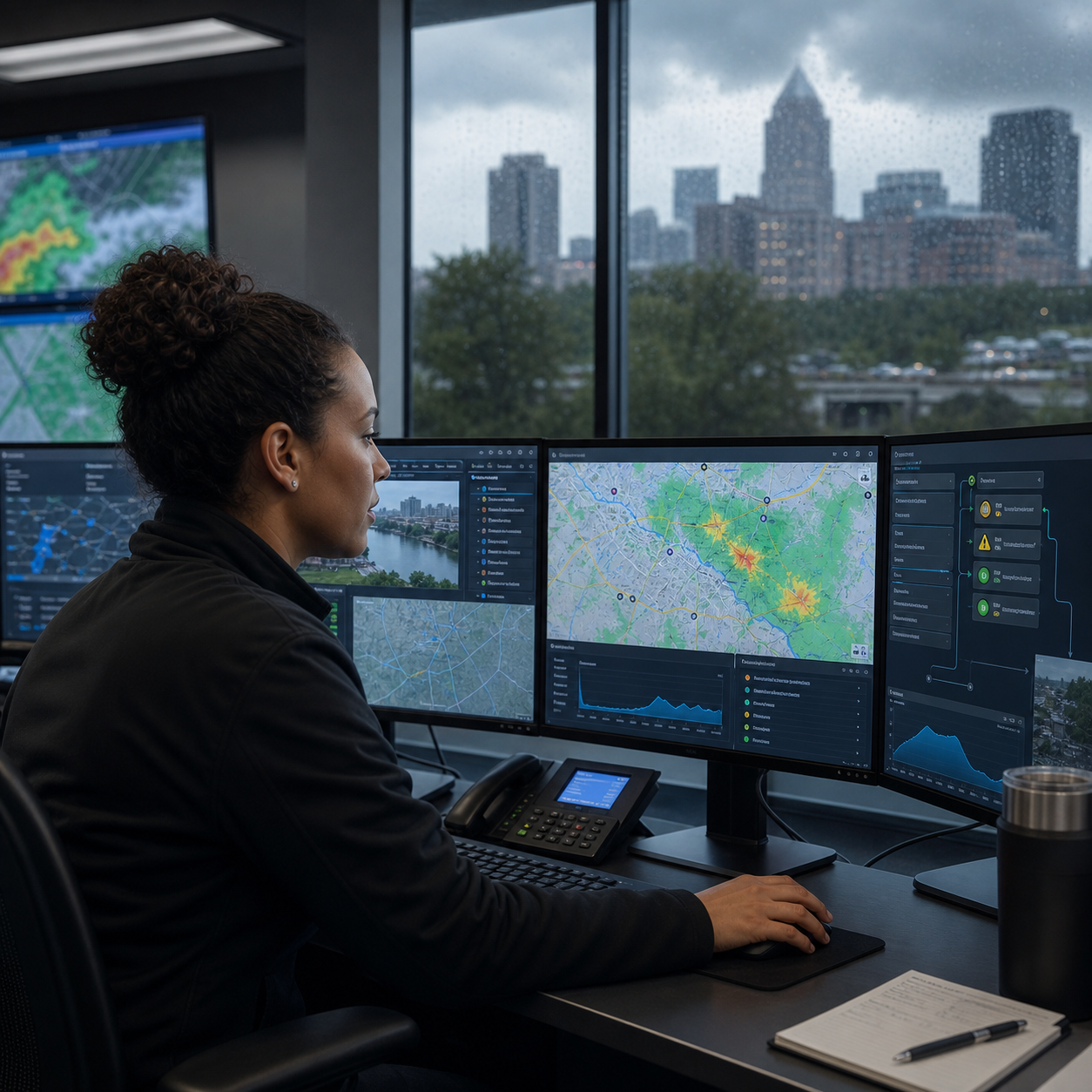
Introduction to Raleigh’s Flood Early Warning System
In July 2025, the city of Raleigh, North Carolina, launched a comprehensive Flood Early Warning System designed to enhance safety and resilience against flood events. This system integrates real-time environmental monitoring sensors with advanced data analytics and public alert mechanisms, providing critical early warnings to residents and emergency services. Flood events pose a recurrent risk to urban infrastructure and human safety, making timely, actionable information a priority for city planners and responders.
Connected Monitoring and Data Integration
The system relies on a network of hydrological sensors placed across vulnerable watersheds and urban flood zones throughout Raleigh. These sensors continuously measure rainfall, river levels, and soil saturation, transmitting data in real-time to a centralized processing platform. The integration of connected devices enables rapid detection of flood conditions, leveraging IoT technology to improve data granularity and accuracy compared to traditional monitoring approaches.
Data fusion from multiple sources is key, with weather forecasts and historical flood data feeding into predictive models that estimate flood onset times and potential impact zones. This connected monitoring framework enhances situational awareness for both municipal authorities and the public, offering a layered and dynamic view of environmental conditions as they evolve.
Automated Warning Systems and Response Workflows
Once flood risk thresholds are exceeded, the early warning system automatically triggers alerts disseminated through multiple channels, including mobile apps, SMS, web portals, and community sirens. These warnings are integrated into established emergency response workflows, ensuring that first responders, public works departments, and healthcare providers receive coordinated information tailored to their operational needs.
Such workflow integration supports efficient resource allocation and evacuation planning, reducing the response time and minimizing potential damage. Furthermore, transparent communication keeps the public informed, fostering trust and encouraging proactive safety measures.
Implications for Urban Flood Management and Engineering Practice
Raleigh's approach demonstrates the value of combining connected environmental monitoring with streamlined response processes in urban flood management. For engineering firms, this highlights opportunities to design systems that not only monitor critical infrastructure but also facilitate data-driven decision-making in crisis situations.
Implementing scalable, interoperable sensor networks and integrating them with comprehensive alert and response platforms can significantly improve community resilience. Ensuring system reliability, data security, and user accessibility are also paramount considerations in engineering these solutions.