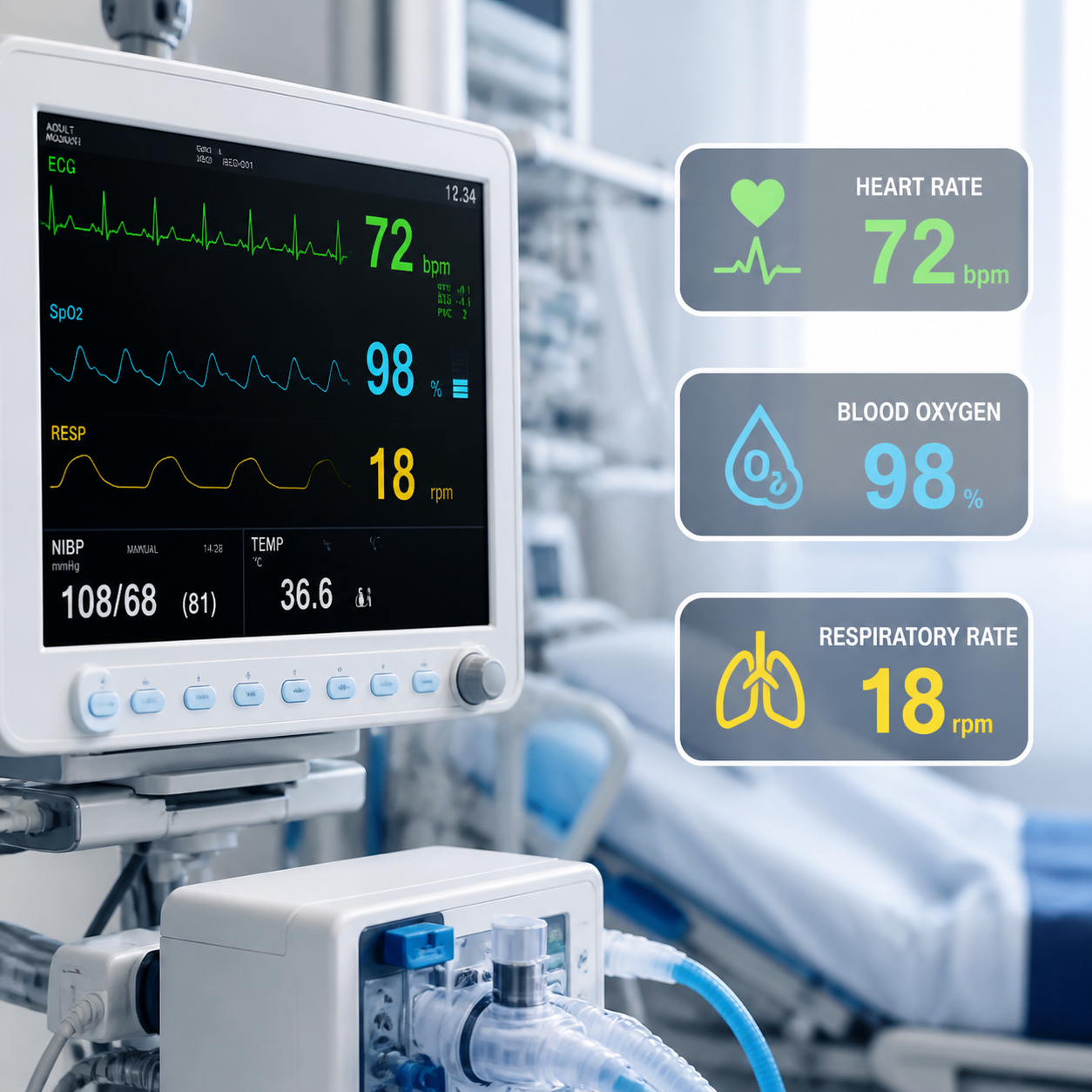
Introduction to Cardinal Health's Innovative Monitoring Device
In June 2025, Cardinal Health announced a breakthrough medical device capable of continuously monitoring three essential vital signs through a single system. This device represents a significant advancement in patient care, providing real-time data that can improve response times and clinical decision-making. By integrating sensing technologies, secure data transmission, and operational dashboards, devices like this help healthcare professionals manage patient conditions more effectively.
The Impact of Connected Sensing in Healthcare
Connected sensing technologies enable continuous, automated monitoring of patient vital signs such as heart rate, blood pressure, and oxygen saturation. This connectivity reduces reliance on manual measurements and minimizes the risk of human error. Moreover, data from these sensors can be aggregated and analyzed to detect early signs of deterioration, facilitating proactive intervention rather than reactive responses. The integration of sensors in one consolidated system, as demonstrated by Cardinal Health’s device, enhances usability and data coherence.
Secure Data Flows and Operational Dashboards Enhance Reliability and Visibility
Secure transmission of patient data from bedside devices to centralized storage and dashboards ensures both patient privacy and accessible real-time information to clinical staff. Operational dashboards aggregate data streams and visualize trends, enabling clinicians to maintain situational awareness across multiple patients and respond swiftly. Secure, reliable data flows also support compliance with healthcare regulations and provide audit trails essential for quality assurance.
Improving Healthcare Environment Response Through Engineering Expertise
The success of devices like Cardinal Health’s hinges on robust engineering solutions that assure measurement accuracy, system reliability, and cybersecurity. Integration challenges include managing sensor interoperability, designing user-friendly interfaces, and ensuring seamless communication within hospital IT infrastructures. Paw Partners specializes in such integrations, bringing practical engineering skills to deliver connected medical systems that enhance healthcare outcomes.
Concluding Thoughts
Cardinal Health’s new continuous monitoring device illustrates a growing trend toward integrated, connected medical technologies that improve patient monitoring and clinical responsiveness. However, achieving the full potential of such solutions requires expertise in engineering connected sensing, secure data management, and operational visualization. Paw Partners offers the necessary engineering acumen and experience to implement these complex systems effectively, helping healthcare providers translate innovative devices into reliable, actionable tools at the point of care.