Market Growth of Wearable Medical Devices
The global wearable medical devices market is rapidly expanding, with projections indicating a valuation of approximately USD 523.58 billion by 2035 and a compound annual growth rate (CAGR) of 25.57%. This growth is driven by an increasing demand for personalized healthcare, mobile health monitoring, and proactive patient management.
Wearable devices such as sensors integrated into watches, patches, and other portable formats provide continuous real-time health data, enabling healthcare providers to monitor vital signs remotely. The integration of Internet of Things (IoT) technology with medical devices produces vast amounts of data, necessitating robust and secure data handling and visualization methods.
Challenges in Connected Sensing and Data Security
Despite their benefits, wearable medical devices introduce engineering challenges. Ensuring accurate and reliable sensing in diverse environments, minimizing power consumption, and maintaining device durability are critical. Moreover, the continuous data streams raise concerns about patient privacy and data security.
Healthcare organizations require secure data flow systems that comply with regulatory standards such as HIPAA and GDPR. The secure transmission, storage, and processing of sensitive information must be prioritized to maintain patient trust and system integrity.
Operational Dashboards for Improved Healthcare Management
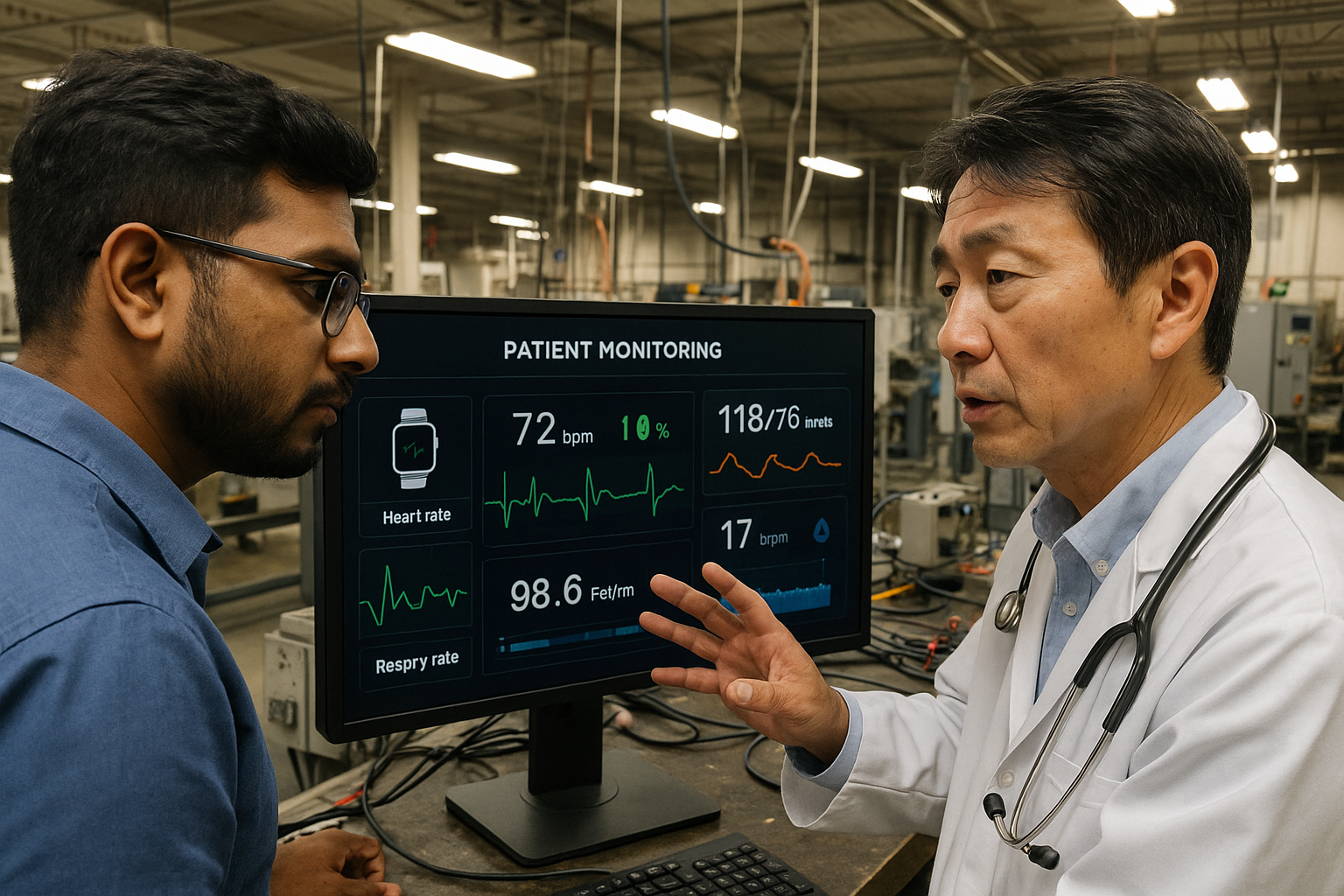
Operational dashboards play a critical role by aggregating data from wearable devices and presenting actionable insights in an accessible format. They enhance visibility into patient health status, allowing healthcare providers to make timely and informed decisions.
Dashboards must be designed to highlight key metrics, trends, and alerts, improving response times and healthcare reliability. Integration with electronic health records (EHR) and hospital information systems ensures continuity of care and operational efficiency.
Paw Partners applies engineering expertise to develop customized solutions that ensure reliable connected sensing, secure data flows, and effective operational dashboards. Our approach helps healthcare providers leverage wearable device data to improve patient outcomes and operational visibility.