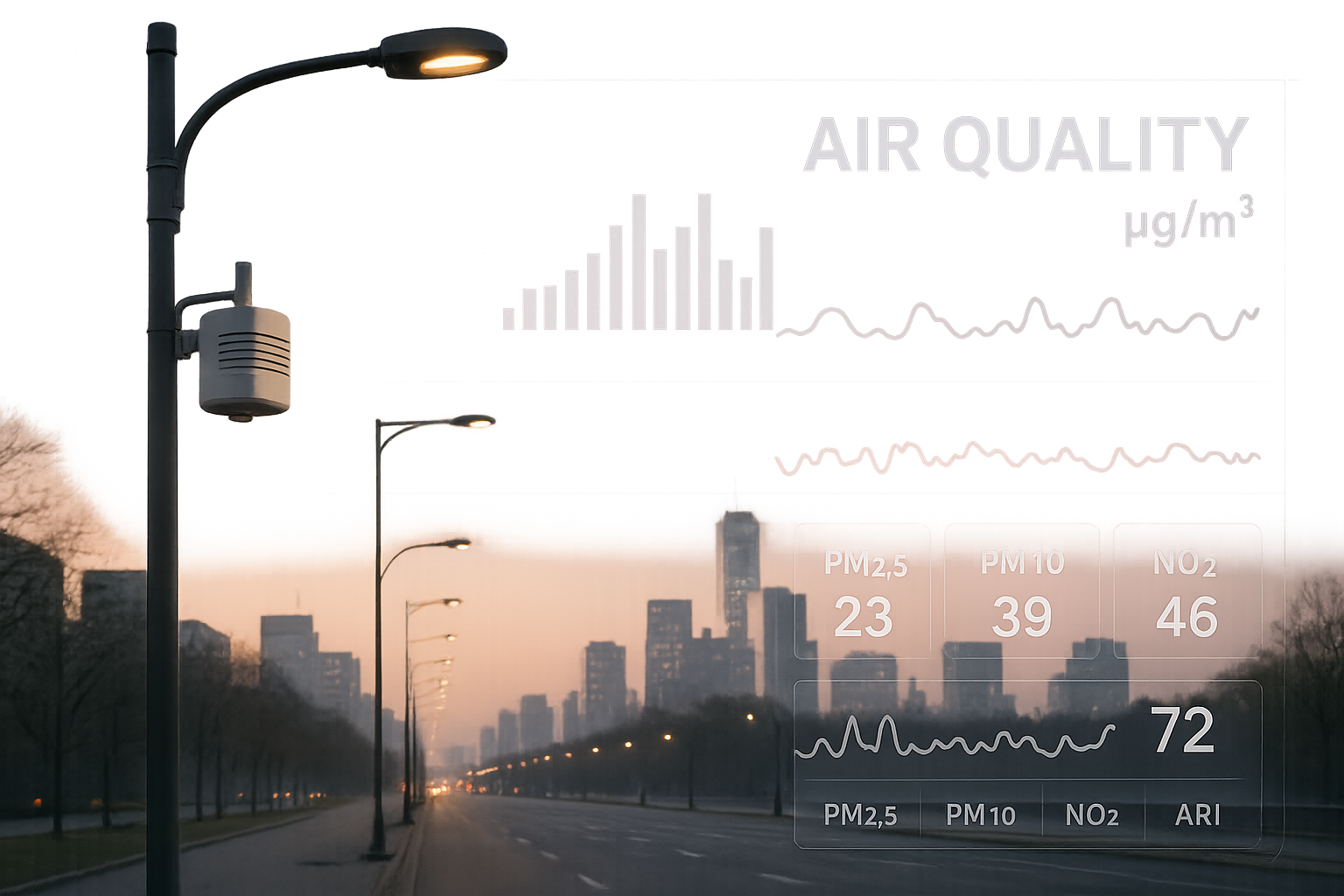
Worcester’s Plan for Enhanced Air Quality Monitoring
In March 2026, Worcester announced a plan to install five air quality sensors throughout the city. This initiative aims to collect accurate, real-time data on pollutants affecting urban environments. Local governments increasingly recognize the value of environmental sensing technologies for safeguarding public health and informing policy decisions.
The Importance of Real-Time Data and Automated Alerts
Accurate air quality data is only useful if it can be interpreted and acted upon quickly. Automated alert systems configured with threshold limits help notify stakeholders immediately when pollutant levels rise to concerning levels. This rapid response capability is essential for protecting vulnerable populations and guiding operational decisions such as traffic control or industrial activity adjustments.
Using Live Dashboards for Informed Decision-Making
Live dashboards consolidate sensor data into visual formats that are easy to understand and analyze. They enable city officials, environmental agencies, and community organizations to track air quality trends, spot problem hotspots, and evaluate the effectiveness of mitigation strategies. Interactive dashboards facilitate transparency and encourage community engagement.
Engineering Solutions for Integrated Environmental Monitoring
Paw Partners specializes in engineering scalable sensor networks coupled with data processing and visualization tools. By leveraging expertise in system integration, Paw Partners can design tailored solutions that combine air quality sensors with automated alerts and live dashboards. This integration supports operational teams in making data-driven decisions swiftly and effectively.
Another important lesson is that organizations need repeatable workflows around the data they collect. A dashboard alone is not enough if teams do not have thresholds, escalation paths, and shared operating rules tied to the signals they see.
For Paw Partners, this kind of situation points to the value of combining device engineering, backend systems, and platform thinking. The strongest results come when hardware, connectivity, data processing, and operational interfaces are designed as one system instead of separate projects.