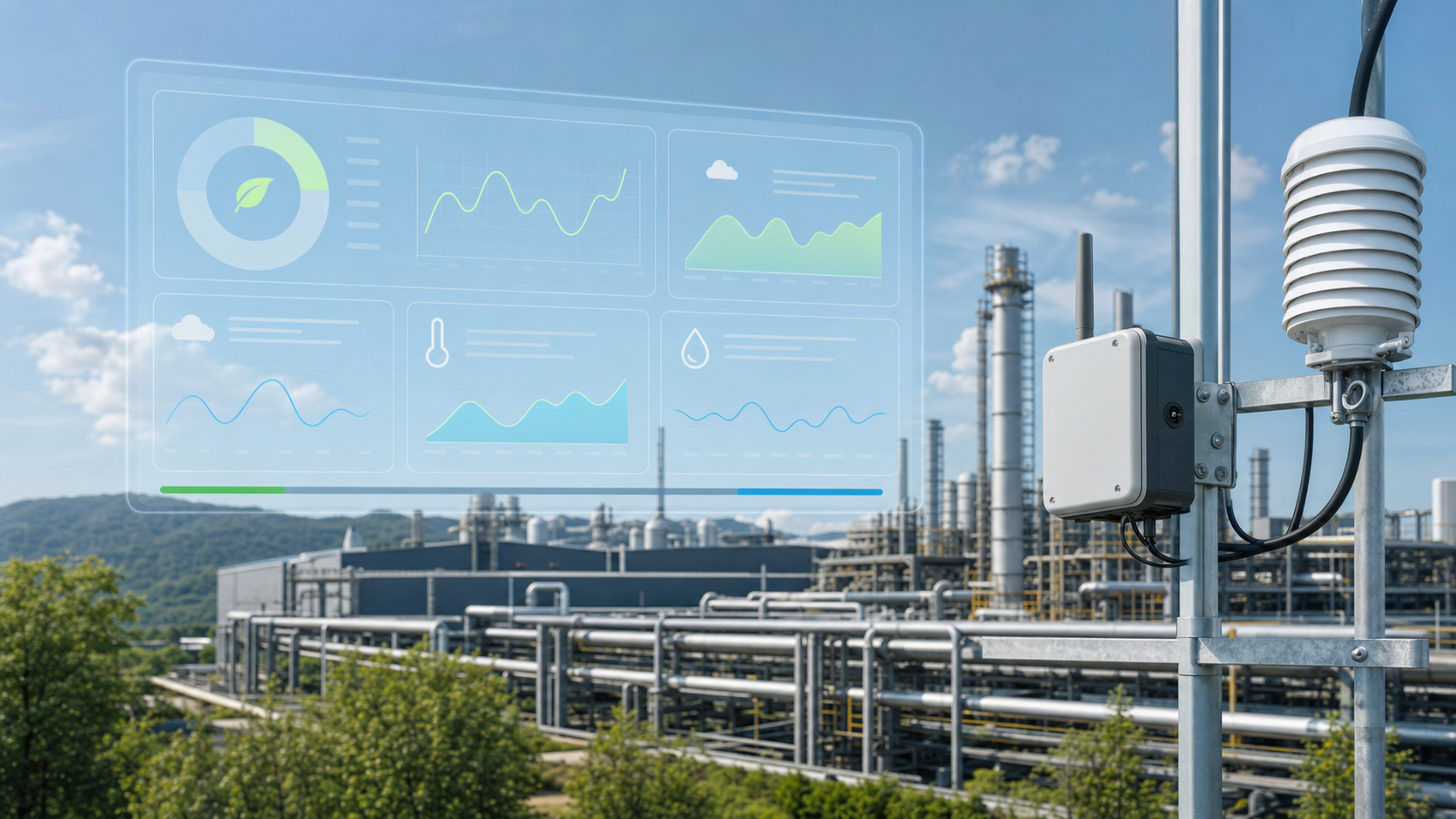
A market research summary published through Yahoo Finance on April 2, 2026 and attributed to The Insight Partners projects that the environmental sensor market will cross $4.38 billion by 2034, expanding at a 7.7% CAGR. The stated driver is stricter environmental regulation, which continues to increase demand for measurement systems that can support compliance, reporting, and operational control.
That forecast matters because environmental sensing is no longer limited to a single instrument reading a single variable. In real deployments, organizations need networks of sensors, reliable connectivity, calibration discipline, dashboards, alerts, and the software workflows that turn measurements into action. The commercial opportunity is not just in the sensor hardware itself, but in the system around it.
For product teams and engineering organizations, this is a useful signal. When regulation tightens, buyers become more selective about traceability, uptime, data quality, and integration with existing operations. A sensor that cannot communicate cleanly with cloud platforms, local gateways, or maintenance systems becomes much less valuable than a connected device that fits into a broader operational stack.
For Paw Partners, this market direction aligns with the kinds of solutions that make sensing programs practical at scale: electronic prototyping, connected device design, platform workflows, automation, live dashboards, and integration across software systems. The technical challenge is to move from raw measurements to dependable decisions.
Why the forecast matters
The headline number tells a broader story about how environmental monitoring is being adopted. Demand is being shaped by compliance pressure, but the real purchase criteria are operational. Buyers want repeatable measurements, transparent system behavior, and software that makes exceptions easy to see and act on.
That shift changes the engineering requirements. The sensor node, communication path, backend ingestion layer, and analytics dashboard have to work together. In practice, this means careful attention to power management, connectivity resilience, device lifecycle controls, and data pipelines that preserve integrity from field device to reporting interface.
What buyers need beyond the sensor
Environmental sensing projects often fail when they stop at hardware selection. A well-specified sensor still needs enclosure design, field reliability, firmware management, and a plan for firmware updates, calibration checks, and alert thresholds. Those are system problems, not isolated component problems.
This is where connected-device thinking becomes important. By pairing sensors with gateways, cloud services, and clear operational workflows, organizations can build a monitoring stack that is easier to maintain and easier to scale. The result is better visibility into conditions, faster response to exceptions, and less manual data handling.
- Device-level reliability supports continuous monitoring in the field.
- Dashboards translate raw readings into actionable status for operations teams.
- Automation reduces the time between threshold breach and response.
- Integration connects monitoring data to maintenance, compliance, and reporting systems.
Engineering implications for product teams
From an engineering perspective, environmental sensing demands discipline across the full product lifecycle. Teams need to think about signal quality, calibration drift, communication loss, battery life, and environmental exposure at the same time. These issues are often interdependent, so treating them separately creates blind spots.
Rapid electronic prototyping is useful here because it allows teams to validate sensor selection, enclosure assumptions, and connectivity architecture before committing to full production. Early prototypes can expose practical issues such as condensation, interference, sampling noise, and field install complexity that never appear in a lab spec sheet.
Once the device is stable, software becomes the differentiator. A reliable platform needs alerting logic, role-based dashboards, data retention policies, and operational workflows that match how teams actually work. That is the difference between a sensor readout and a business system.
What this means for compliance and operations
The regulatory angle in the forecast is important because compliance work rarely stops at measurement. Organizations usually need proof, history, auditability, and response records. That means sensor data has to be trustworthy and easy to retrieve, not merely visible in real time.
When systems are designed with operational reliability in mind, environmental monitoring can support more than reporting. It can help teams spot anomalies earlier, reduce downtime, and standardize responses across sites. For many buyers, that is where the return on investment becomes clear.