On March 31, 2026, Today’s Medical Developments highlighted how wearable medtech is changing medical device development, using a University of Arizona project called SleeveSense as a practical example. The story matters because it is not just about a new form factor; it is about how a medical device moves from laboratory concept to a product that can be worn continuously, used in real care settings, and eventually sold through a commercial startup.
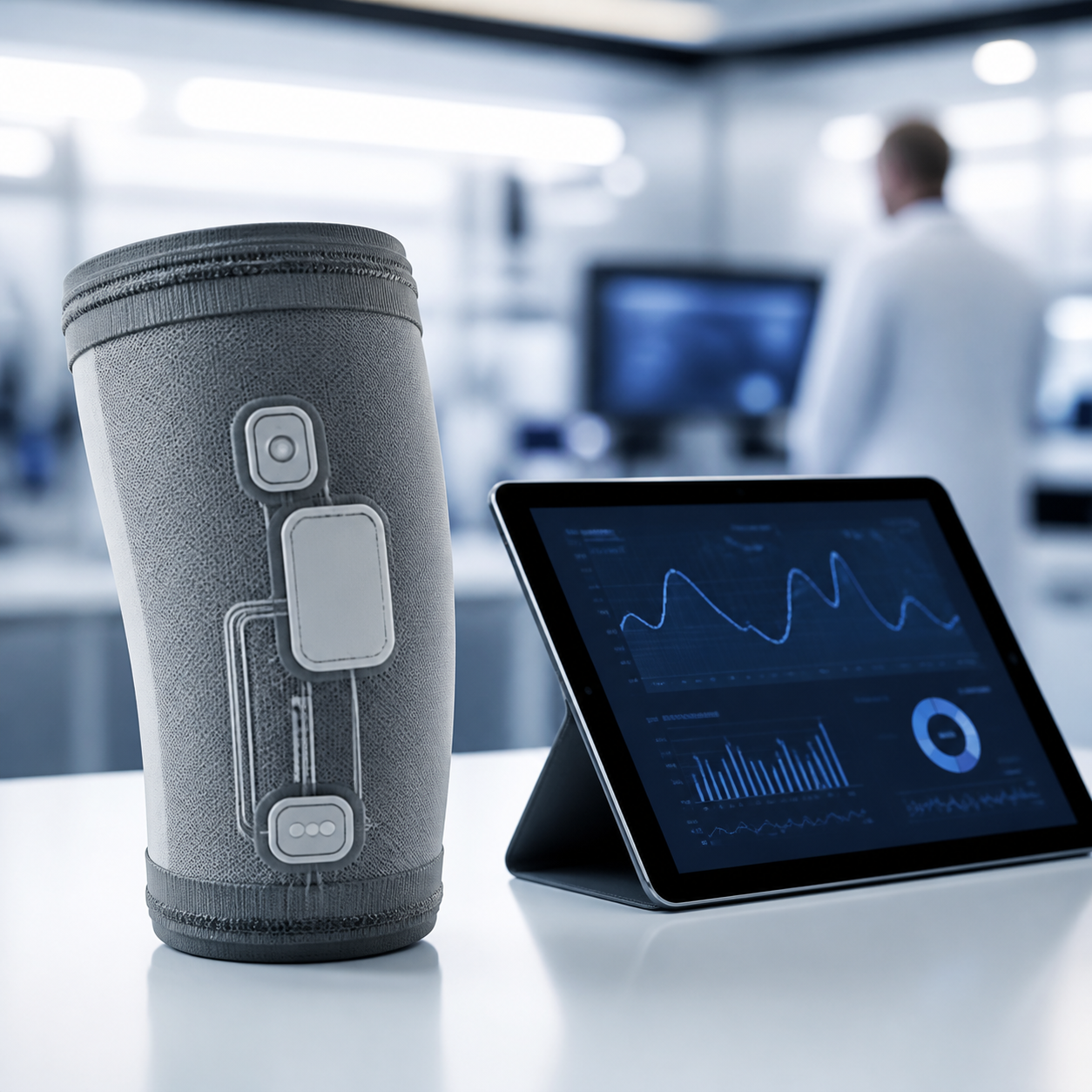
In the article, SleeveSense is described as a mesh sleeve with sensors that measure vital signs in real time. The device was developed at the University of Arizona by Philipp Gutruf, associate professor and associate department head of biomedical engineering, and the technology was licensed to Senphonix, which expects to bring it to market in 2027. The company is working with the university to make the design accurate, comfortable, and suitable for long-duration wear.
That combination of research, licensing, and commercialization is important because wearable medtech exposes problems that traditional devices can sometimes hide. A wearable product has to balance sensing accuracy, patient comfort, durability, data visibility, and workflow impact at the same time. If any one of those pieces fails, adoption becomes difficult even when the underlying science is strong.
For engineering teams, this is where the real challenge begins. Wearables are not only compact devices; they are connected systems that depend on electronic prototyping, data flow design, software integration, and reliable operational dashboards. The source story shows why successful development requires more than a good sensor. It requires a product architecture that can survive the move from prototype to clinical use and then to scalable manufacturing.
From Research Device To Commercial Product
SleeveSense illustrates a common medtech pattern: a university invention becomes useful only when a commercial partner can refine the design for real-world use. The article makes clear that Senphonix licensed the technology and is now working with the inventor to push the device toward a commercial state. That transition is often where promising ideas either stall or become real products.
From a development perspective, this phase usually demands repeated prototype cycles, careful user feedback, and practical engineering tradeoffs. A wearable that seems viable in a lab may still fail in daily use if it is too rigid, too intrusive, or too difficult to maintain. Paw Partners works in exactly this type of environment, where product teams need help turning technical concepts into integrated systems that are robust enough for deployment.
Why Wearables Change The Engineering Problem
Wearable medtech changes the engineering problem because the product must remain reliable while living on a human body. That means comfort and data quality are linked. If the device shifts, irritates the wearer, or is too hard to keep on for long periods, the data stream becomes less useful no matter how advanced the sensors are.
The article’s description of SleeveSense as suitable for continuous wear over days, weeks, or months is a good reminder that wearability is not a cosmetic requirement. It is a core system requirement. Engineering teams need to think through materials, enclosure strategy, sensor placement, power behavior, and the software layer that turns raw signals into usable information for clinicians and care teams.
What Clinical Teams Actually Need
The story also frames the device in operational terms: it is intended to help nurses track patient health while reducing workload. That point is easy to overlook, but it is central to adoption. In healthcare, a device succeeds when it fits the workflow, not when it simply demonstrates technical novelty.
This is where connected systems matter. A wearable device becomes more valuable when its data can be organized into dashboards, alerted on intelligently, and routed into the right operational process. Paw Partners helps teams design those software systems and integration layers so that sensing data becomes actionable information instead of another isolated feed.
Designing For Scale, Reliability, And Integration
Wearable medtech development is also a manufacturing and reliability problem. A prototype can prove the concept, but commercialization requires repeatable builds, stable performance, and enough design discipline to support production. The University of Arizona example shows that the path to market depends on more than the initial invention; it depends on the ability to productize the design.
That is why automation, integration, and system-level thinking are so important. For companies building connected healthcare products, the best engineering teams plan for testing, data handling, and operational monitoring early. They design the device, the software, and the workflow together so the final system can be supported in the field without creating avoidable burden for staff or patients.
Source: Today’s Medical Developments via Google News. The University of Arizona College of Engineering later highlighted the same coverage in its biomedical engineering news.