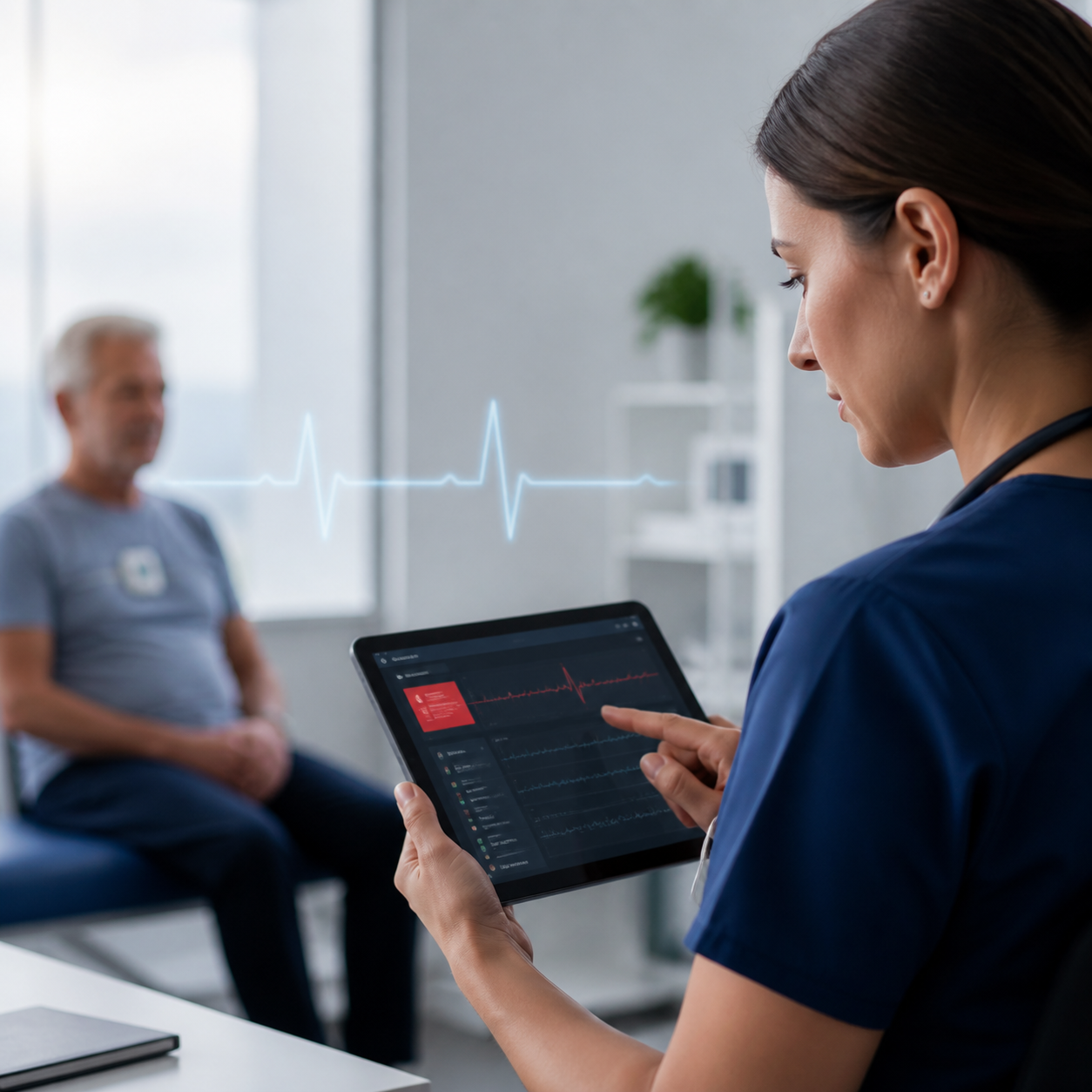
On April 21, 2026, IndexBox published a market analysis on World Cardiac Rhythm Remote Monitoring Devices, framing the segment as a live commercial and operational topic rather than a narrow device category. The headline itself points to a market view shaped by forecast, size, trends, and practical adoption drivers.
The source is relevant to device makers, platform teams, healthcare operators, and service providers that support cardiac monitoring programs. These systems now sit at the intersection of hardware, software, reimbursement, and care coordination, which means market growth depends on much more than sensor performance alone.
The visible IndexBox framing also points to an important business signal: remote monitoring demand is being pulled by reimbursement codes and by workflows that move cardiac observation outside the hospital. That shifts the engineering burden toward reliable telemetry, resilient connectivity, alert handling, and clean handoffs into clinical review systems.
For companies building in this space, the challenge is not simply detecting a rhythm event. The harder problem is turning device data into trusted operational action, with low-latency transmission, auditability, integration with downstream systems, and enough automation to prevent clinicians and coordinators from being overwhelmed.
What the IndexBox article is signaling
The article’s title suggests that cardiac rhythm remote monitoring is being treated as a structured market with a clear forecast horizon, not as an experimental technology. That matters because market framing often follows where reimbursement, procurement, and product standardization are already moving.
In practical terms, the market is defined by the relationship between monitoring devices and the platforms around them. Wearables, telemetry units, implantable devices, and cloud services only create value when they work together as a reliable monitoring chain.
Where the operational pressure shows up
Remote cardiac monitoring introduces several failure points that do not exist in a simple standalone device. Data can be delayed, alerts can be duplicated, batteries can age unexpectedly, and wireless links can drop at the wrong moment.
Those issues quickly become business problems. If alert quality is poor or workflows are fragmented, clinical teams spend more time triaging noise and less time responding to real events, which reduces the operational value of the monitoring program.
- Telemetry integrity: the system must preserve signal quality from device to dashboard.
- Alert routing: the right event has to reach the right person fast enough to matter.
- Workflow continuity: escalation, review, and documentation need to stay connected.
- System uptime: monitoring only works when devices, cloud services, and integrations stay available.
What product teams should build for
This is where Paw Partners-style capabilities become useful: electronic prototyping, connected-device design, software systems, automation, dashboards, and integration work all sit directly in the critical path. A good cardiac monitoring product is a systems engineering problem, not just a hardware problem.
Teams should design for end-to-end reliability from the first prototype. That means validating device behavior, testing remote data flows, defining alert logic early, and making sure the product can fit into real-world operations without creating manual workarounds.
A practical stack usually combines a sensing layer, secure connectivity, a cloud processing layer, an alert engine, and a clinician-facing dashboard. When those layers are aligned, operators can reduce downtime, improve response times, and create a more defensible service model.
Why the market matters now
IndexBox’s April 2026 analysis is useful because it points to a market that is no longer defined only by clinical need. Reimbursement expansion and operational scalability are now part of the product story, and that changes how vendors should design, validate, and support their offerings.
For buyers and builders alike, the key question is whether a remote monitoring system can convert physiological data into dependable action. The companies that succeed will be the ones that treat alert quality, workflow automation, and integration reliability as core product features.
Source: IndexBox, World Cardiac Rhythm Remote Monitoring Devices - Market Analysis, Forecast, Size, Trends and Insights.