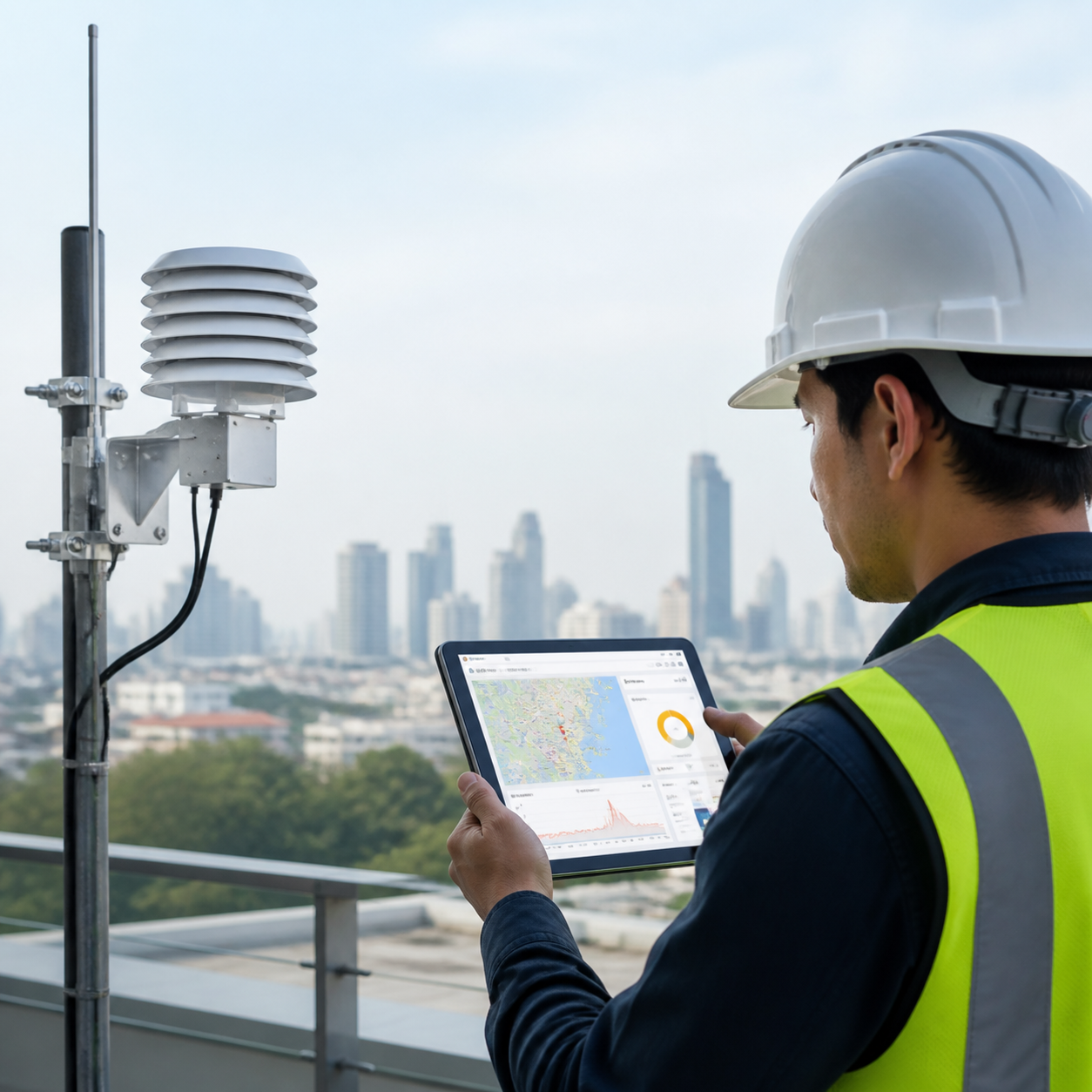
Recent work highlighted by NASA Earthdata shows how low-cost air quality sensors can make environmental data more accessible and actionable. That matters because air quality events quickly become operational issues for schools, industrial sites, logistics operators, public facilities, and any organization responsible for people working in exposed conditions.
When air quality data is limited, delayed, or disconnected from day-to-day operations, teams struggle to decide when to alert staff, adjust site activity, or escalate protective measures. The technical challenge is not only collecting data, but turning it into a reliable monitoring workflow that supports real decisions.
The engineering gap behind environmental response
Many organizations still rely on manual checks, fragmented sensors, or external reports that are not integrated into internal systems. That creates slow response times, limited visibility across locations, and weak audit trails when conditions change quickly.
What a better monitoring system looks like
A stronger approach combines field sensors, secure connectivity, backend processing, automated thresholds, and clear dashboards. With that foundation, operators can monitor multiple sites, detect abnormal readings earlier, trigger alerts automatically, and keep decision-makers aligned on the same live view of conditions.
This is where engineering discipline matters. Sensor hardware, device reliability, firmware behavior, APIs, dashboards, and workflow design all need to work together if environmental monitoring is going to be useful outside of a pilot project.
How Paw Partners can help
Paw Partners can help design and prototype sensor-connected devices, build the software systems that process environmental data, and deliver platform capabilities for monitoring, alerting, and operational reporting. For teams planning air quality or other field-monitoring projects, the goal is not just measuring conditions. It is creating a system that people can trust and act on in the real world.
Reference source: Read the source