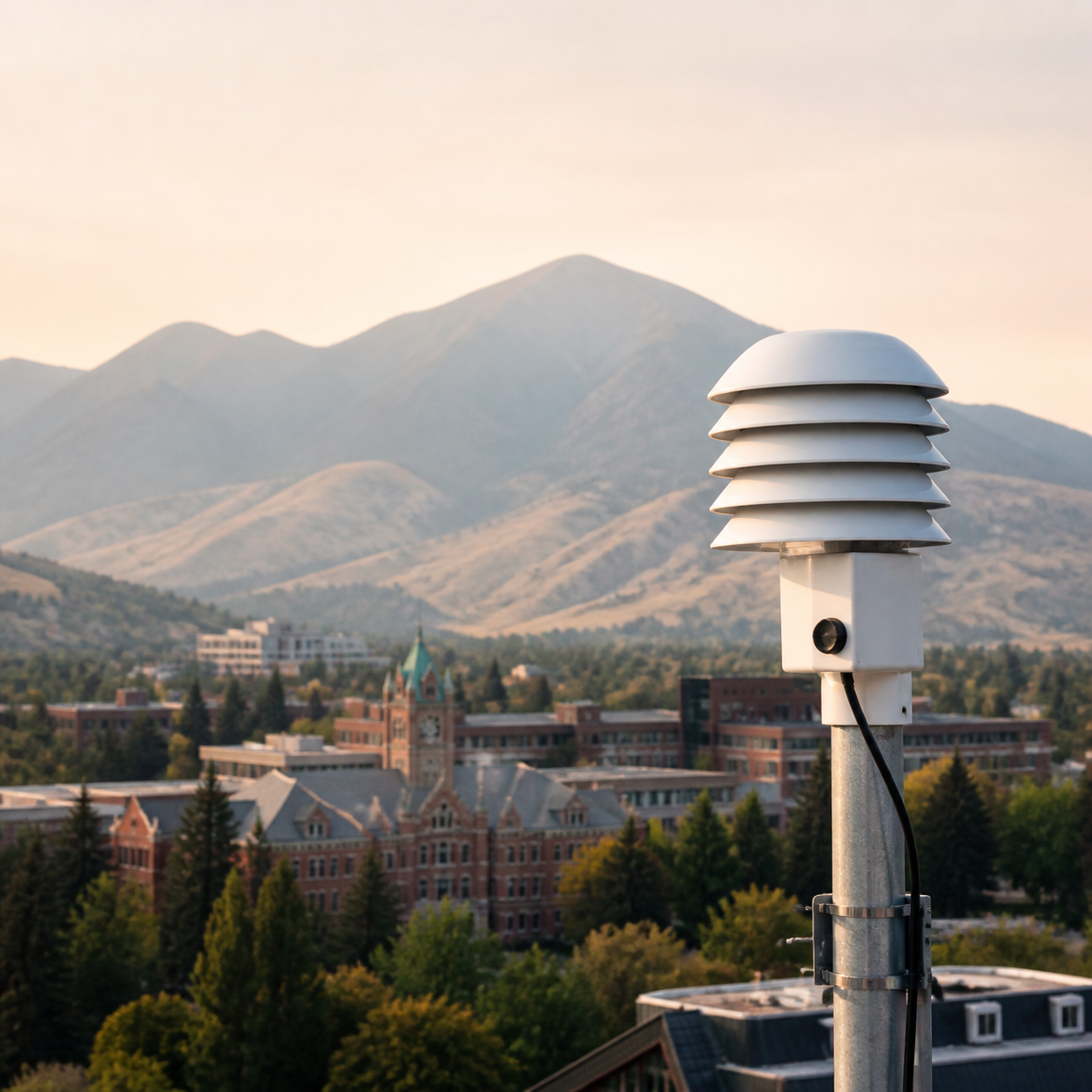
On April 14, 2026, Montana coverage highlighted a cross-sector effort by the State of Montana, the University of Montana, and the Montana High School Association to expand air-quality monitoring across the state. The program uses low-cost PurpleAir sensors to fill wildfire-smoke gaps in places where standard monitoring coverage is thin.
The practical problem is not a lack of air-quality expertise. It is the state’s geography. Montana is large, rural, and exposed to fast-moving wildfire smoke, which means traditional regulatory monitors do not always tell coaches, teachers, parents, or local officials what is happening at a specific school or neighborhood when they need to act.
The source says the initiative is in its third year and that roughly two-thirds of Montana school communities have joined. That matters because the network is no longer just a pilot; it is becoming an operational layer for public-health decisions during smoky days, outdoor activities, and other time-sensitive situations.
For Paw Partners, this is a familiar systems problem: a distributed sensing layer only becomes useful when data flows cleanly into a dashboard, alerts are dependable, and the people responsible for the outcome can trust the readings enough to act on them. The value is not the sensor alone. The value is the end-to-end workflow.
Why the network matters
Wildfire smoke is a moving target. PM2.5 levels can change quickly with wind, terrain, and fire behavior, so state-level averages are rarely enough for school campuses or communities that need local decisions.
By adding lower-cost sensors across Montana, the network improves spatial coverage and helps close the blind spots between formal monitoring stations. That gives public agencies and local operators a more detailed view of conditions during smoke events.
What the program is solving
The immediate goal is to make air-quality data easier to use in everyday operations. Schools need to know whether to move activities indoors, adjust practices, or communicate risk; public agencies need to target advice and track changing conditions.
Because the sensors are deployed through a statewide partnership, the system also creates a repeatable model for filling coverage gaps. That is important in rural environments where the lack of data is structural, not incidental.
What operators can learn
Connected-device programs work best when the hardware, data path, and response workflow are designed together. A sensor that is cheap but unreliable creates noise; a dashboard with no operational owner creates delay.
- Use distributed sensors to add local context where regulatory coverage is sparse.
- Separate raw collection from decision-ready views so different users can see the data they need.
- Pair alerts with response playbooks so staff know what action follows a threshold breach.
This is the same architecture pattern used in reliable IoT systems, facility monitoring, and operational dashboards. The technical challenge is less about collecting numbers and more about turning measurements into consistent action.
For organizations building monitoring products, the Montana example reinforces a simple point: resilience comes from integration. When sensing, software, alerts, and accountability are connected, teams can respond faster and with less guesswork.
Source: 406 Sports via Google News