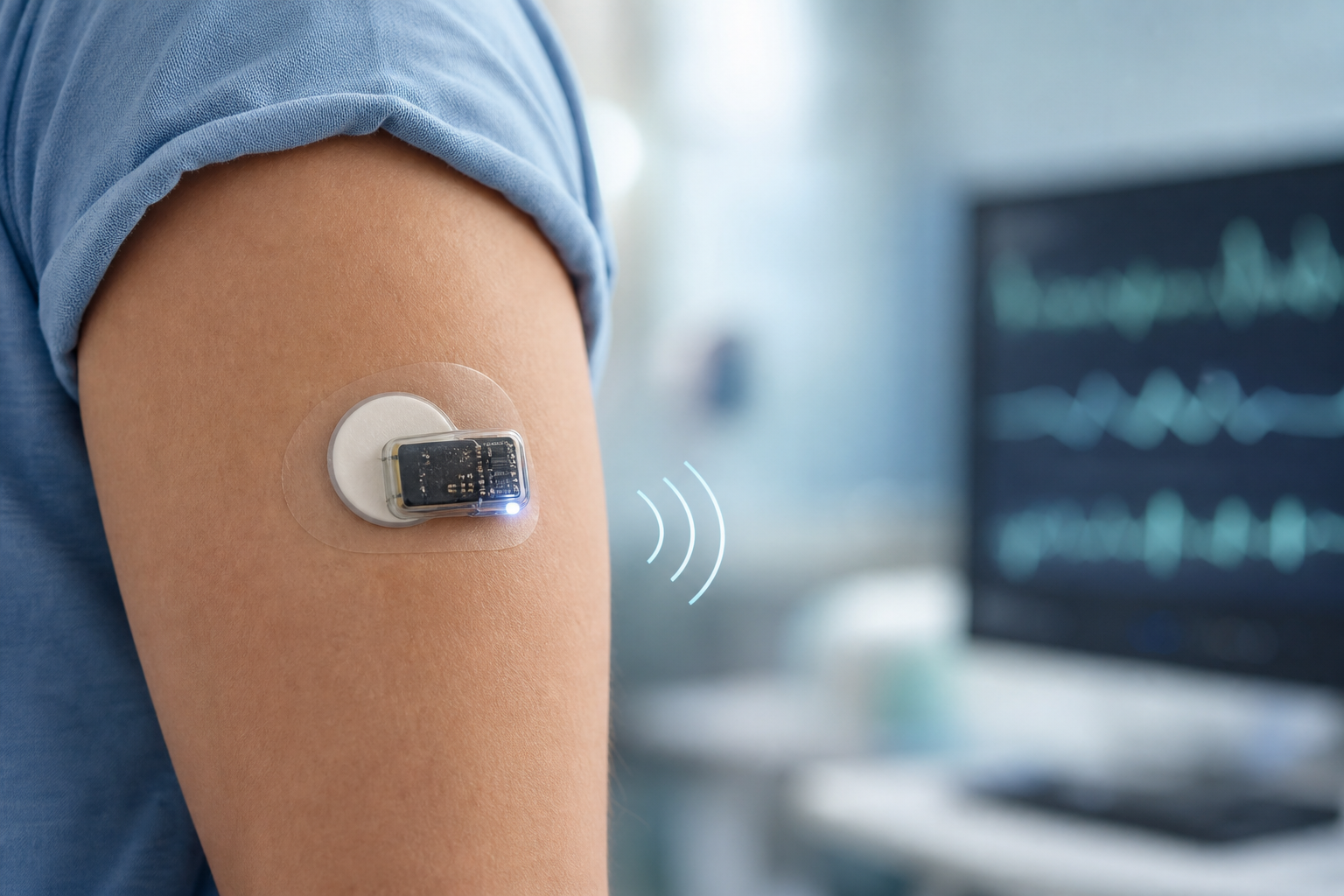
On March 2, 2026, Medical Xpress reported on a KAUST-led research project that aims to make wearable biosensors more dependable by checking electrode-skin contact in real time. The work, published in Results in Engineering, addresses a practical problem that often sits below the surface of digital health: a device can be worn correctly in the morning and still begin to deliver weaker or less trustworthy data later in the day.
The issue matters because many clinical and consumer monitoring systems depend on stable contact between electrodes and skin. When that contact degrades due to motion, sweat, or partial detachment, signals from heart monitors and other biosensors can drift, weaken, or disappear. In a home-monitoring context, that can create false confidence in data that should be treated carefully.
Traditional lead-off or impedance-based checks were not built for every real-world condition. They are often indirect, and they can miss the early stages of loosening that matter most if a device is supposed to monitor continuously. That gap creates both an engineering problem and an operational problem: the hardware may be collecting data, but the system may not know whether the data are still reliable.
The KAUST team approached the problem differently by using tiny digital signals that travel through the body. Instead of treating the body as noise to work around, the system uses communication quality itself as the indicator of electrode status. That makes the sensing layer more self-aware and gives wearable platforms a stronger foundation for automation, alerts, and long-duration monitoring.
Why contact integrity is the real monitoring challenge
Wearable health devices are only as useful as the signals they can capture consistently. A patch, strap, or chest sensor may look secure, but even small changes in contact can affect readings enough to distort downstream analysis. For clinicians and device teams, the important question is not simply whether a sensor is on the body, but whether it is still on the body in a way that supports trusted measurement.
That distinction matters for ECG, EEG, and EMG use cases, and it matters even more when monitoring moves outside the clinic. In a hospital, staff can spot a bad connection and replace an electrode. At home, that failure mode can persist unnoticed, which raises the risk of missing events or recording data that looks valid but is not.
How the KAUST system works
The reported prototype uses a custom chip that sends and receives tiny signals between electrodes across the body. A processing unit then evaluates the communication result, using the quality of the signal path as a proxy for whether the electrodes are firmly connected, partly loose, intermittently losing contact, or fully disconnected.
According to the source, the system is designed to detect the early stages of contact degradation rather than waiting for a complete failure. The research team also emphasized low power consumption and a compact design, which are important if the logic is to be embedded inside wearable medical devices that need to run continuously without frequent charging or major redesign.
What this means for connected health platforms
The real value of this kind of sensing improvement appears when it is connected to software. A biosensor that can identify its own contact quality can feed live dashboards, trigger workflow alerts, and help clinicians or caregivers distinguish between a true physiological change and a data-quality issue. That reduces manual checking and makes remote monitoring more operationally credible.
For companies building connected devices, this is a useful design pattern. Paw Partners-style work in electronic prototyping, IoT-connected devices, software systems, analytics dashboards, and automation can help turn a lab sensor into a dependable product workflow. The hardware needs signal integrity checks, but the platform also needs event handling, status telemetry, and clear user-facing decisions about when to trust data and when to intervene.
The most practical near-term outcome is not a replacement for existing biosensors, but a reliability layer around them. If a device can tell the system that contact is weakening before measurements fail, the product can respond with a prompt, a log entry, or an escalation path instead of silently degrading. That is the kind of improvement that matters in both clinical deployment and long-running home care.
Source: Medical Xpress, March 2, 2026.