IndexBox's March 26, 2026 report on the global vital signs monitoring devices market describes a sector that is changing in structure, not just in size. The forecast to 2035 is shaped by preventative health models, remote patient monitoring, and a broader shift toward continuous rather than episodic care.
The report makes a clear distinction between two demand pools. On one side are hospitals and acute care teams that need interoperable multi-parameter systems with strong alarm management and EHR connectivity. On the other are home and ambulatory users who want connected, easy-to-use devices that can support ongoing monitoring without adding workflow friction.
That split matters because it changes what “good” looks like in the market. The winning product is no longer only the most clinically accurate device. It is also the one that can move data reliably, integrate with software systems, and fit into a monitoring program that scales across sites and care settings.
The operational problem underneath the market story is familiar to any device or platform team: healthcare systems are under staffing pressure, cost pressure, and integration pressure at the same time. If monitoring devices cannot feed clean data into dashboards, alerting layers, and record systems, they create more manual work instead of reducing it.
For Paw Partners, this is the same systems challenge seen across connected devices in other industries. Device telemetry, software workflows, alert routing, and uptime discipline are becoming part of the product value itself, not just supporting features.
What the report says about demand
IndexBox frames the market as being supported by structural drivers rather than short-term spikes. Its baseline scenario points to steady expansion through 2035, with a projected 6.2% compound annual growth rate and a market index near 185 by 2035, using 2025 as the base year.
The report ties that growth to several recurring forces: aging populations, rising chronic disease burdens, expanding telehealth adoption, reimbursement support for remote patient monitoring, and wider use of Bluetooth, Wi-Fi, and cellular connectivity in medical devices.
It also notes important constraints. Advanced systems can be expensive, regulatory pathways remain fragmented, privacy and cybersecurity concerns persist, and interoperability between devices and existing hospital information systems is still a major barrier.
Where the business value shifts
In hospitals, the report shows demand moving away from simple replacement purchases and toward integrated monitoring networks. The focus is increasingly on devices that can support intensive care, operating rooms, centralized monitoring stations, and tighter links to clinical decision support tools.
That creates an engineering requirement that many buyers underestimate: reliable data flow matters as much as sensor performance. If a monitor cannot hand off data cleanly into an EHR or fleet dashboard, the result is more manual reconciliation, more alarm fatigue, and more operational drag.
In home healthcare, the value proposition is different but equally operational. Remote monitoring programs are meant to reduce readmissions, catch deterioration earlier, and let teams manage more patients with fewer in-person visits. Those programs depend on dependable connectivity, simple onboarding, and clear alert thresholds.
This is where software systems become a force multiplier. A connected monitoring stack needs device provisioning, telemetry ingestion, exception handling, and escalation logic. When these layers work well, they reduce downtime, improve field execution, and give operators a real-time view of what needs attention.
What builders should design for
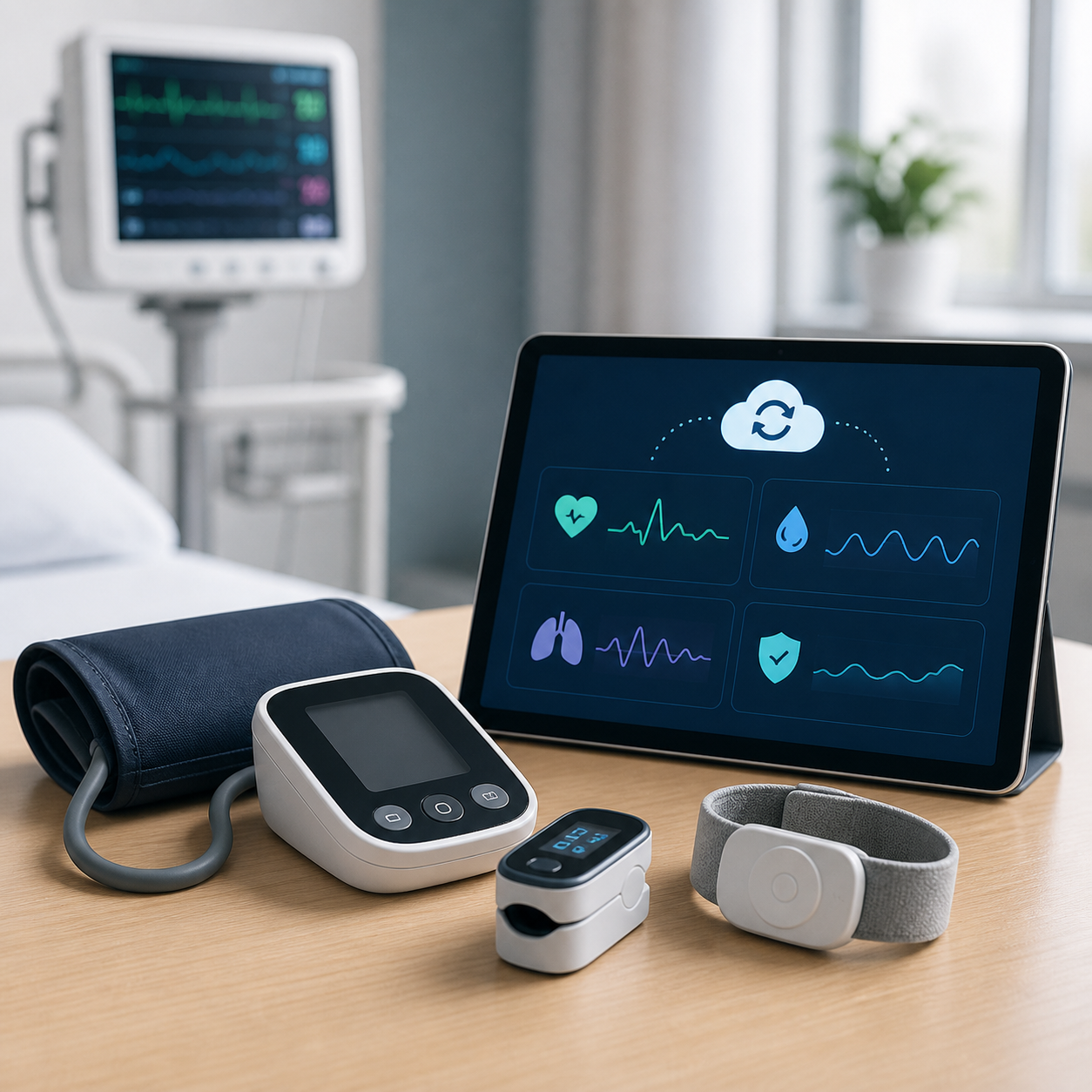
The report’s product coverage reinforces a practical conclusion: the market now spans patient monitors, pulse oximeters, blood pressure monitors, ECG devices, temperature sensors, capnographs, multi-parameter monitors, and wearable medical monitors. In other words, the category is broad enough that one-size-fits-all architecture is unlikely to work.
For product teams, the priority should be a platform approach: modular hardware, secure connectivity, software-ready data models, and integrations that fit both clinical and home-use workflows. That approach is also the best fit for organizations that need to turn device signals into actionable service operations.
For Paw Partners, the opportunity is to translate that same design logic into reliable workflows: connected prototypes, telemetry pipelines, dashboarding, automated alerts, and integration layers that help teams see problems before they become outages. In markets like this, uptime is not a support metric; it is part of the product promise.
Source: Google News RSS source. Underlying report page: IndexBox.