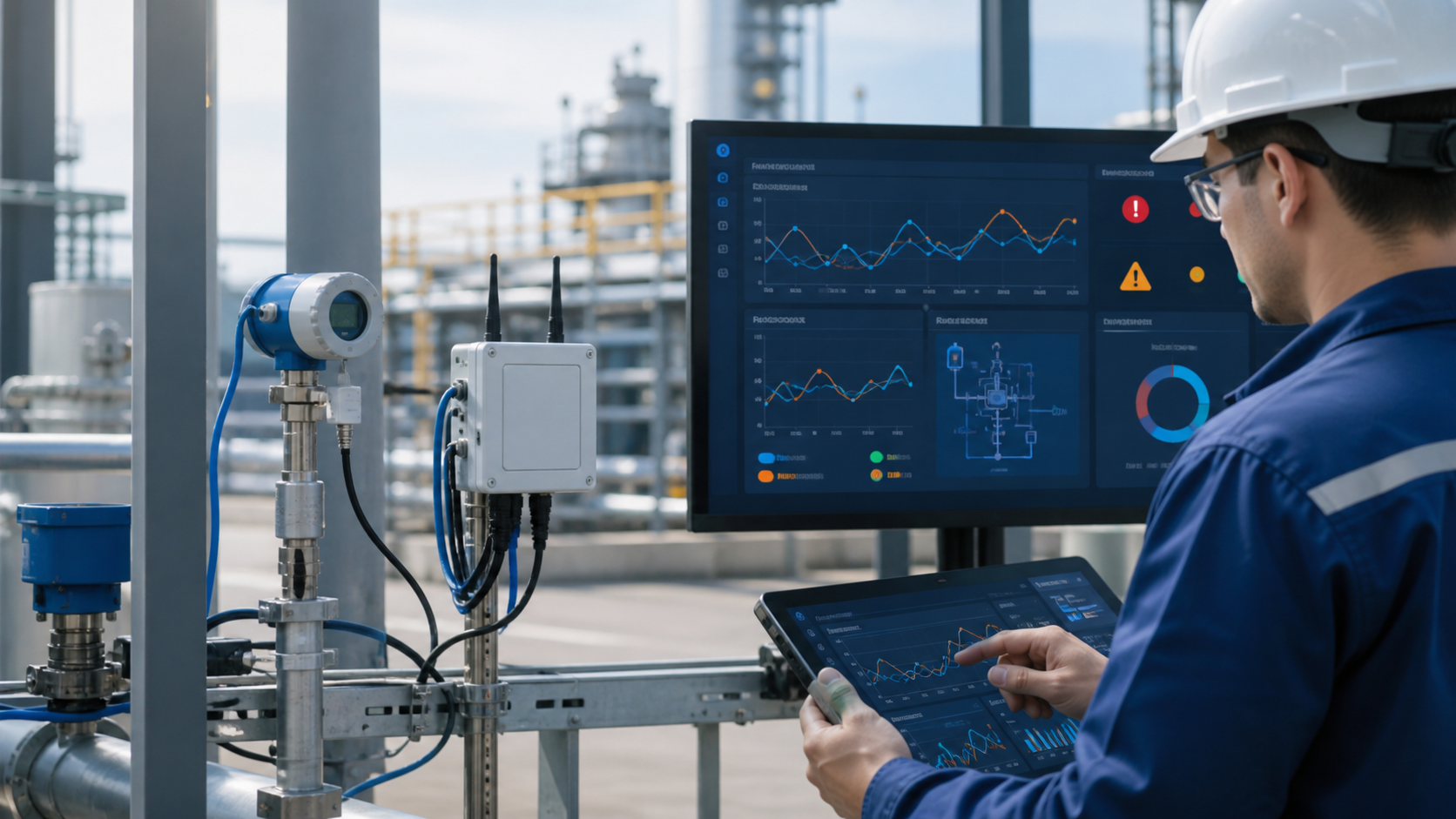
The openPR.com article published on April 11, 2026, points to a global sensors market expected to grow at an 8.4% CAGR from 2026 to 2033. The headline is market-oriented, but the underlying message is operational: sensors are becoming more central to how products collect data, detect conditions, and support decision-making across industries.
For engineering and product teams, that matters because the sensor itself is only one part of the system. A sensing strategy becomes commercially useful when the device can reliably capture telemetry, transmit it through a stable software stack, and surface the right information to operators before problems turn into downtime.
The source also frames the market around investment opportunities and innovation trends. That combination usually reflects a broader shift in buyer expectations: organizations want more than measurement. They want better observability, faster response times, and integration with the systems they already use to manage assets, service teams, and compliance workflows.
For Paw Partners, this is a familiar problem space. Electronic prototyping, IoT-connected devices, platform workflows, dashboards, automation, and integration are what transform sensor data into something operationally actionable. The business value comes from the chain that starts at the edge and ends in a reliable decision path.
Why The Market Signal Matters
A projected 8.4% CAGR suggests steady expansion, not a one-off spike. That kind of growth typically rewards companies that can ship robust sensing products and support them with durable software infrastructure, especially when devices are deployed outside controlled environments.
In field settings, sensor performance is rarely the limiting factor on its own. Connectivity instability, incomplete data models, weak alert logic, and fragmented monitoring tools often create the real bottleneck. That is why market growth often tracks with demand for better telemetry pipelines and more disciplined operational tooling.
From a B2B engineering perspective, the report is a reminder that sensor programs are increasingly platform programs. Teams that can connect device data to dashboards, service processes, and alerting systems are better positioned to prove ROI and reduce avoidable manual work.
What Buyers Will Expect
As the market grows, buyers tend to look for solutions that are easier to deploy and easier to maintain. That means clearer onboarding, stronger device health visibility, and software that helps teams answer simple questions quickly: is the device online, is the reading plausible, and is action required now?
Those expectations create pressure on product architecture. Sensors need to be embedded into systems that can normalize incoming data, trigger rules, and route events to the right people or tools. Without that layer, sensor deployments can become expensive data collectors with limited business impact.
This is where connected-device program design becomes strategic. A well-structured telemetry platform can reduce downtime by turning scattered readings into health alerts, enabling operators to identify anomalies before they become service interruptions or missed production targets.
Implications For Engineering Teams
Engineering teams should treat sensor adoption as a reliability program, not only a hardware selection exercise. Early decisions about power, connectivity, message frequency, and failure handling shape the long-term maintainability of the product.
Prototyping is especially important when a sensor solution will be used in real operational workflows. Rapid electronic prototyping helps validate signal quality, enclosure constraints, and data behavior before the design is locked for production. That reduces rework and improves confidence in the field rollout.
Once devices are in use, software reliability becomes just as important as hardware reliability. Dashboards, alert thresholds, integration points, and exception handling should be designed to keep operations moving even when data is incomplete, delayed, or out of range.
How Paw Partners Fits The Opportunity
Paw Partners builds the layers that make sensor systems useful in practice. That includes connected-device architecture, monitoring platforms, dashboard experiences, automation logic, and integration into the business systems that teams already rely on day to day.
In a market shaped by growth and investment interest, the most durable advantage is not just sensing more things. It is creating an end-to-end system that helps operators see issues sooner, respond faster, and preserve uptime with fewer manual checks.
Source: openPR.com via Google News RSS