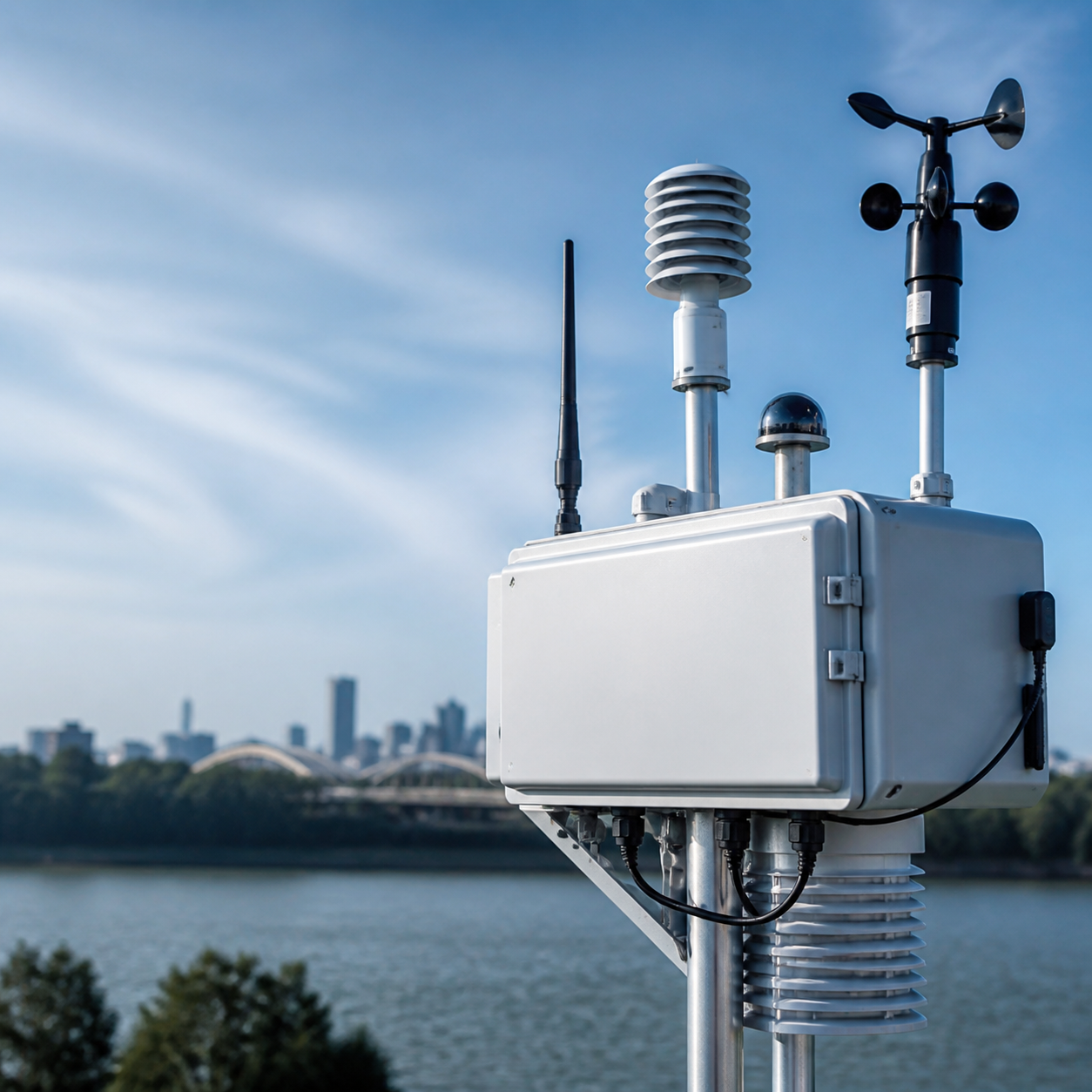
In December 2025, Envirotech Online reported that Aquaread had introduced the Ostara monitoring station from nke to the UK market as an exclusive offering. The article matters because it frames air-quality monitoring as more than a compliance exercise: it is an operational data problem that affects how quickly organizations can see, understand, and act on changing site conditions.
Ostara is presented as a remote monitoring station built to deliver real-time insight into air quality and environmental conditions. According to the source, it can track particulate matter and gases including carbon monoxide, hydrogen sulphide, nitrogen dioxide, and ozone, while making the data available online through the Inoview web platform.
The station also measures weather variables such as wind speed, wind direction, temperature, atmospheric pressure, and relative humidity. It further calculates indexes such as wind chill, dew point, and freezing point, which gives operators a more complete picture of local conditions instead of isolated sensor readings.
For teams responsible for environmental operations, the engineering challenge is not just sensing. It is turning many streams of data into a usable view that supports decisions, reporting, and response. That is the same systems problem Paw Partners helps solve through connected devices, software workflows, dashboards, automation, and integration.
What the station adds
The source emphasizes versatility. Ostara is positioned as a station that can be configured around site needs rather than a single-purpose air monitor. That flexibility matters when different stakeholders need different variables from the same location, whether the priority is pollution tracking, weather context, or broader environmental oversight.
Because the data is published online through Inoview, the station is not limited to local readouts. Remote access makes the system more useful for distributed estates, field teams, and organizations that need historical context as well as current values.
- Fine dust and particulate matter
- Carbon monoxide, hydrogen sulphide, nitrogen dioxide, and ozone
- Wind speed and direction
- Temperature, atmospheric pressure, and relative humidity
- Derived environmental indexes such as wind chill, dew point, and freezing point
Why multi-parameter monitoring matters
Air quality is rarely understood well from one sensor alone. Weather changes can influence dispersion, exposure, and interpretation, so combining atmospheric measurements with pollutant readings produces a more reliable operational view. For facilities, campuses, and community-facing sites, that context is what turns a raw measurement into a decision.
The product also stands out because it supports integration with the WiMo multiparameter water quality probe. That is useful for locations where air and water conditions are operationally linked, such as industrial sites, environmental monitoring programs, and infrastructure near surface water.
In practice, this kind of integration reduces the friction that often comes from managing separate instruments, separate portals, and separate reporting paths. A single platform can simplify maintenance, training, and review while keeping more of the monitoring picture in one place.
What connected monitoring changes
The business value is not only in the sensors. It is in how quickly teams can see a problem, verify it, and respond. Real-time access to current and historical data supports faster decisions, better trend analysis, and more disciplined operations.
That is also why reliability matters. A monitoring platform needs durable hardware, clear data handling, and software that can scale from one deployment to many. Paw Partners often approaches this same class of problem by combining electronic prototyping, IoT connectivity, automation logic, and dashboard design into a single product workflow.
For organizations building or buying environmental systems, Ostara is a useful example of the direction the market is taking: more parameters, more remote visibility, and more integration across the stack. Those are the ingredients that help monitoring become an operational tool rather than a passive record.
Source: Envirotech Online