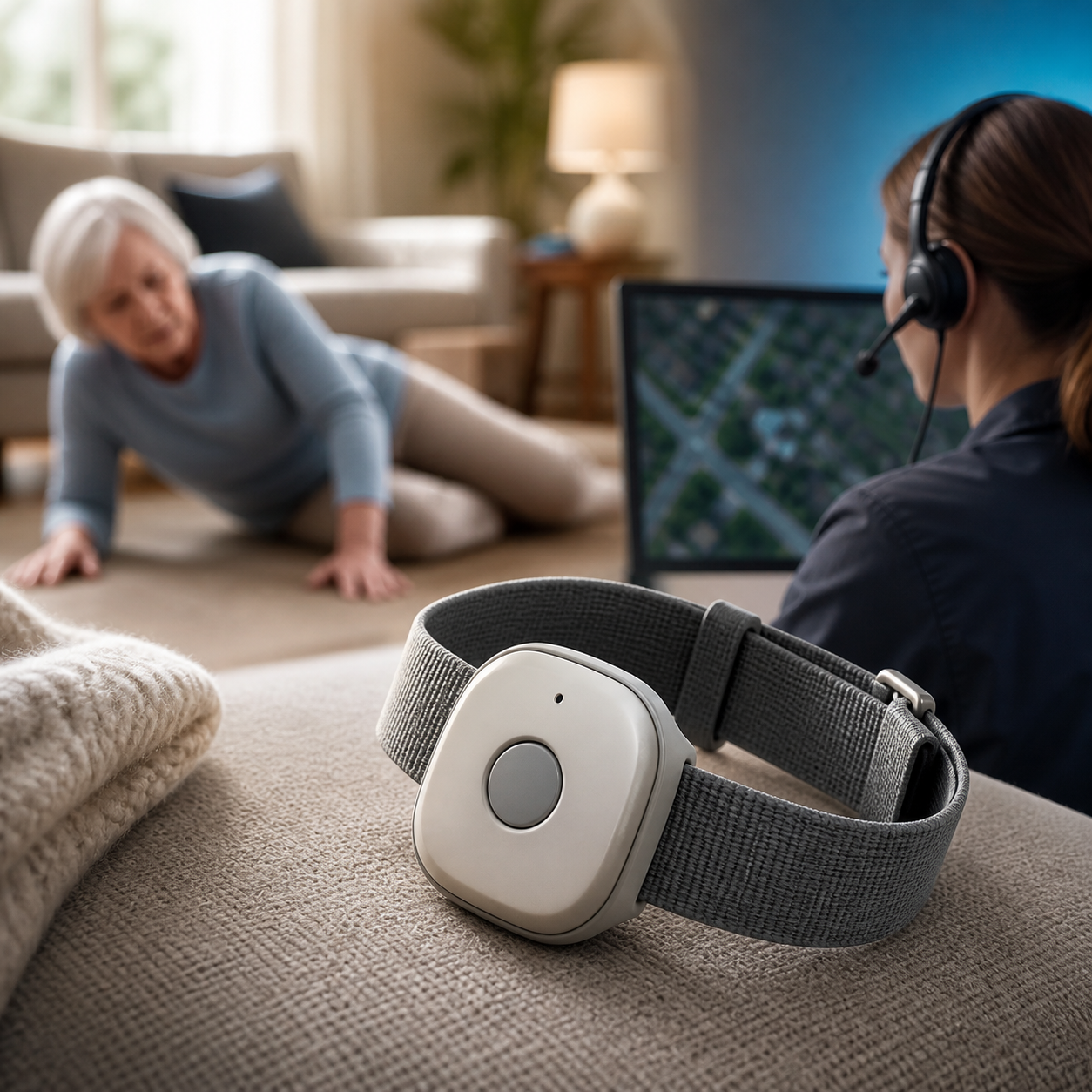
On June 4, 2026, the National Council on Aging (NCOA) published its review of the best medical alert systems with fall detection. The article is aimed at people evaluating emergency response devices for aging in place, but it also exposes a broader engineering problem that applies to any connected device program: the system has to work reliably when the user is stressed, movement is unpredictable, and the cost structure is easy to misunderstand.
NCOA says it tested more than 35 devices across 16 lab tests, interviewed experts, surveyed more than 1,000 users and caregivers, and compared products on factors such as price, fall detection accuracy, response time, battery life, and GPS performance. Its top overall pick was Medical Guardian, while Bay Alarm Medical was recognized for customer service, MobileHelp for no-surprise fees, and LifeFone for battery life.
The review matters because falls are a major safety risk for older adults, especially at home, and the report notes that fall detection can support people who want to age in place. At the same time, NCOA is explicit that no fall detection system is perfect. That tension between safety expectations and real-world sensing limitations is exactly where product design, monitoring operations, and support workflows matter most.
For teams building connected devices, dashboards, or service platforms, the article is a useful reminder that the customer experience starts long before an emergency. The device must be wearable, the cellular and GPS layers must be dependable, the monitoring center has to answer quickly, and billing must be clear enough that a buyer can compare options without surprise activation or equipment fees.
What NCOA Found in Its 2026 Review
NCOA’s comparison highlights four products that stood out for different reasons. Medical Guardian ranked best overall, Bay Alarm Medical ranked best for customer service, MobileHelp ranked best for avoiding surprise fees, and LifeFone ranked best for battery life. That spread suggests buyers are not choosing on one technical dimension alone; they are balancing reliability, usability, and operating cost.
The price model is also important. NCOA says medical alert subscriptions with fall detection typically start around $20 to $34 per month, with fall detection adding about $10 per month. It also notes that some systems include equipment or activation fees, which can change the real cost of ownership significantly. In practical terms, the headline monthly price is not enough to judge the system.
Why Accuracy and Response Time Matter
Fall detection is a sensing problem, not just a feature checkbox. NCOA explains that wearable devices use accelerometers, barometers, and algorithms to identify a fall and decide whether to place a call for help. It also emphasizes that no system is 100% accurate, which means product teams have to design for both false alarms and missed events.
That reality has direct engineering implications. NCOA cites research suggesting chest-worn devices can be more accurate than wrist-worn devices in some cases, and it warns that softer falls may be harder for smartwatch-style devices to detect. For connected-device teams, that is a reminder to match the sensing form factor to the use case instead of assuming one wearable can serve every user equally well.
Response time matters just as much as detection quality. If a device correctly detects a fall but the monitoring path is slow, the user still experiences a failure. NCOA’s testing approach shows why dashboards, alert routing, and service-level performance need to be treated as part of the product, not as a separate support function.
What Buyers and Operators Should Watch For
NCOA calls out several cost categories that often get overlooked: fall detection add-ons, equipment charges, activation fees, protection plans, and optional caregiver apps. The article also notes that Original Medicare does not cover medical alert systems, although some Medicare Advantage plans may cover part or all of the cost. That kind of pricing opacity is a common source of user confusion and abandoned purchases.
For operators, the lesson is straightforward: make the commercial model visible inside the workflow. If a customer needs to see the total monthly cost, device fee, and any optional services before checkout, that information should be surfaced early in the experience. Clear pricing reduces support burden and makes comparison shopping easier.
What This Means for Connected Device Programs
The NCOA review is really a case study in end-to-end reliability. A fall-detection system succeeds only when the wearable, network connection, monitoring center, caregiver notifications, and billing system all behave predictably. If any layer is weak, the user experience breaks at the exact moment it matters most.
That is where Paw Partners-style capabilities can help: electronic prototyping to validate the device form factor, IoT and connected-device design to support sensing and connectivity, software systems to coordinate alerts, dashboards for monitoring and caregiver visibility, and automation workflows to reduce response delays and manual errors. The article makes a clear case for designing these systems as a coordinated service stack, not as isolated hardware features.
For product leaders, the practical takeaway is to test for the real failure modes: false alarms, missed falls, poor battery performance, unclear fees, and slow escalation. A robust system is one that handles those edge cases gracefully while staying simple enough for users and caregivers to trust.
Source: NCOA, The Best Medical Alert Systems with Fall Detection of 2026.